
Inquiry
What service actually sends from the field
Service sends a photo of the nameplate and a finger on the PDF. The position replaces that finger.
The mail arrives on Monday just after seven. The subject is "machine down", sometimes with the plant name, sometimes with only the type. Three files are attached. A photo of the nameplate, taken at an angle, with a reflection across the serial number. A photo of the station, greasy, with a finger in the frame pointing somewhere. And another photo, this time of a screen: a page from the documentation PDF, with a thick arrow drawn on it that ends between two balloons. The body of the mail says "this part here, please quickly" and gives a phone number.
That is the handover inside sales already knows. The technician is standing at the machine. Inside sales is at a desk. Between them there is no position. There is a finger and an arrow. Both mean something. Neither is a part number.
The technician is at the machine
Gloves on, the hall light middling, the shift waiting. He photographs the nameplate first, because he was told that without the plate nothing moves. It often sits on the side, painted over, or behind a cable, and he shoots it as he can reach it. Then the PDF: on the laptop in the van, in a folder in the cabinet, or in a mail from three years ago that someone forwards. He opens the page closest to the station. He is not sure it is current. He is sure the machine is down.
He puts a finger on the picture because that is faster than typing a number. Sometimes he draws the arrow in the viewer, in a colour that later prints grey. The arrow hits the leader line, not the balloon, or it hits the neighbour, because the screen is small and the glove covers the spot. The page is often cropped. The handbook page number is missing, and the assembly name sits in a header he did not shoot. He sends what two minutes allow. A bill-of-materials number assumes the right list is in front of him.
What arrives on the desk
Inside sales opens the mail and lays the three pictures side by side. From the nameplate they try to read the serial. One digit is lost in the reflection. Another might be an 8 or a 3. The type is readable, and the type opens the family, not the sheet. Then the arrow. They find a PDF page that resembles the photo and compare two balloons near the arrowhead. Position 12 and position 14. The names are close. One is the lining, one the strip under it. Grease and film on the station photo hide the edge that would tell them apart.
Now the second round starts. A call, a question back, a request for a sharper picture, a request to read the number in the balloon out loud. By then the technician is at the next machine, or in the car. The shift has improvised. If nobody calls back, inside sales decides from the last order for this type. The last order was the other revision. The part goes out and comes back.
The PDF page in the photo is often not the page inside sales holds as valid. Handbooks go out with the machine and are not replaced later. The arrow sits on a sheet from back then. Today's bill of materials has superseded the number, or moved the position. Inside sales sees the arrow and an old number, and has to translate both. The mail does not contain that translation. Sometimes maintenance only forwards the photo, or purchasing smooths the text. "Arrow on page 40, on the left" becomes "see attachment". The attachment stays. The sentence that explained it falls away.
The photo proves someone was there
The nameplate photo shows that someone is standing at this machine, and that a plate exists. If the serial is readable, it also shows the number that otherwise gets mistyped. It is not a part number. The serial selects the machine. It does not select the position on the drawing. Derive a part from a nameplate photo and you have the type, and perhaps the serial. The part is still missing.
The station photo shows that the station looks like this: oily, with this hood, with this hose. It rarely shows the back, and the back is often where the bore sits that separates two variants. It shows no balloon. An experienced eye recognises some of it, and is wrong on the parts that differ only by a chamfer or a length. The drawing carries that difference as a number. The photo carries it as an impression.
The finger and the arrow are an attempt to turn the impression into a place. The attempt is understandable, and it is blurred. A place on a drawing is a position. A position is a number in the balloon that has a line in the bill of materials. An arrow that ends between two balloons has no line. It has a neighbourhood. You cannot pick a neighbourhood.
The position replaces the finger
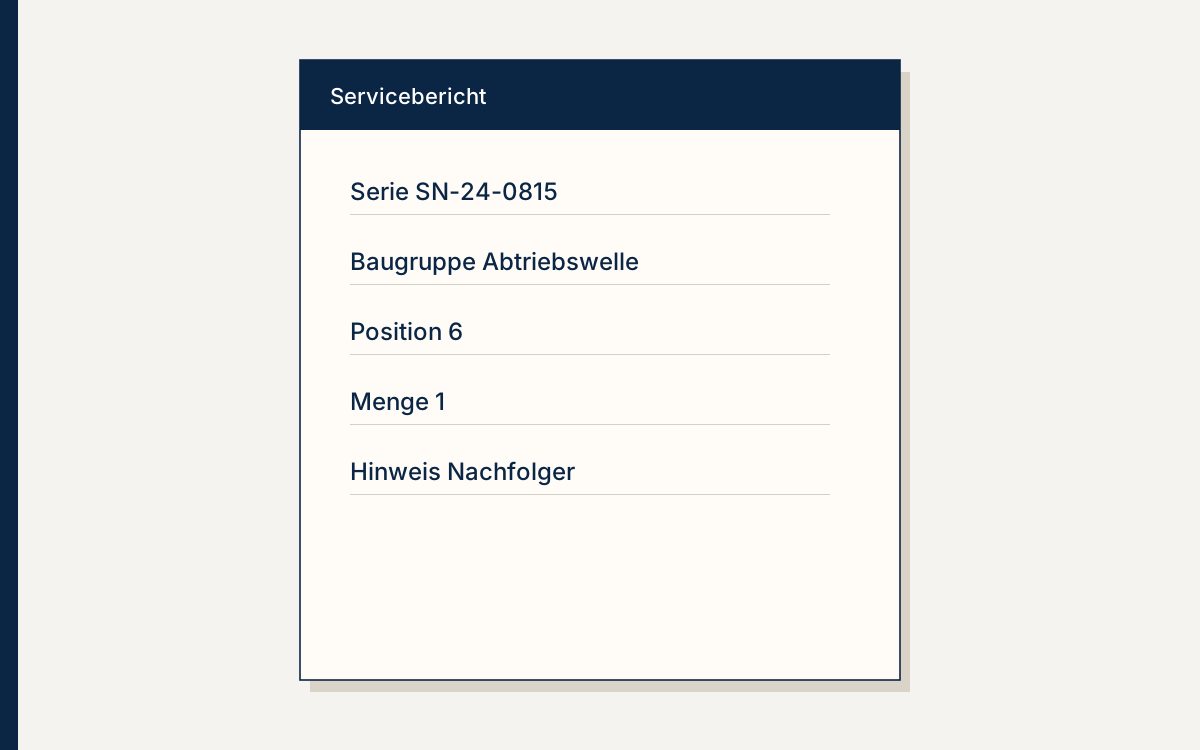
The other path starts in the same place, at the nameplate. The serial is typed in, after a wipe if need be, digit by digit. It opens the exploded view released for this machine, not the PDF from the van and not whatever page the type has in the folder of every year. The technician sees the assembly for his station. He taps the mark, the balloon, not the area beside it. The position is then a number, not a neighbourhood.
He sets the quantity himself. One, when one lining is changed. Two, when both are due. The bill of materials shows how many are fitted. It does not set the order quantity. The request holds serial, assembly, position, part number, name, and that quantity. If the number is superseded, the successor is noted beside it, as information, not as an error. The old number stays findable.
What arrives at inside sales is this line, as email or as CSV. The columns are serial, assembly, position, part number, name, quantity, and the note on the successor. There is no booking, no price, no write into the ERP, no checkout. Inside sales reads the line and makes the job they used to rebuild from the arrow. The rebuilding falls away. The quote and the delivery time stay a decision. The technician reads the serial off the plate and hits the position. He does not photograph a PDF, and he does not draw an arrow.
What inside sales still does afterwards
The line saves the guess between position 12 and position 14. It does not save the quote. Availability, price, and the question of whether this serial gets the successor or the remainder of the old part, stay at the desk. The drawing has only named the successor. Whether it goes out in this case is something you write into the quote.
A readable serial on a photo remains a detour if the arrow comes after it. Without the tap on the mark, someone still has to produce the line, and the next morning that is a guess. A digit nobody can read remains a gap. An invented serial would open the neighbouring sheet. Better a call back over an unreadable spot than a part from the wrong drawing.
The finger on the PDF was long the best gesture available. It remains a gesture. The position is the sentence the warehouse and inside sales can take over without interpreting it.
By Clemens Jonathan Schmid
Related articles
All articles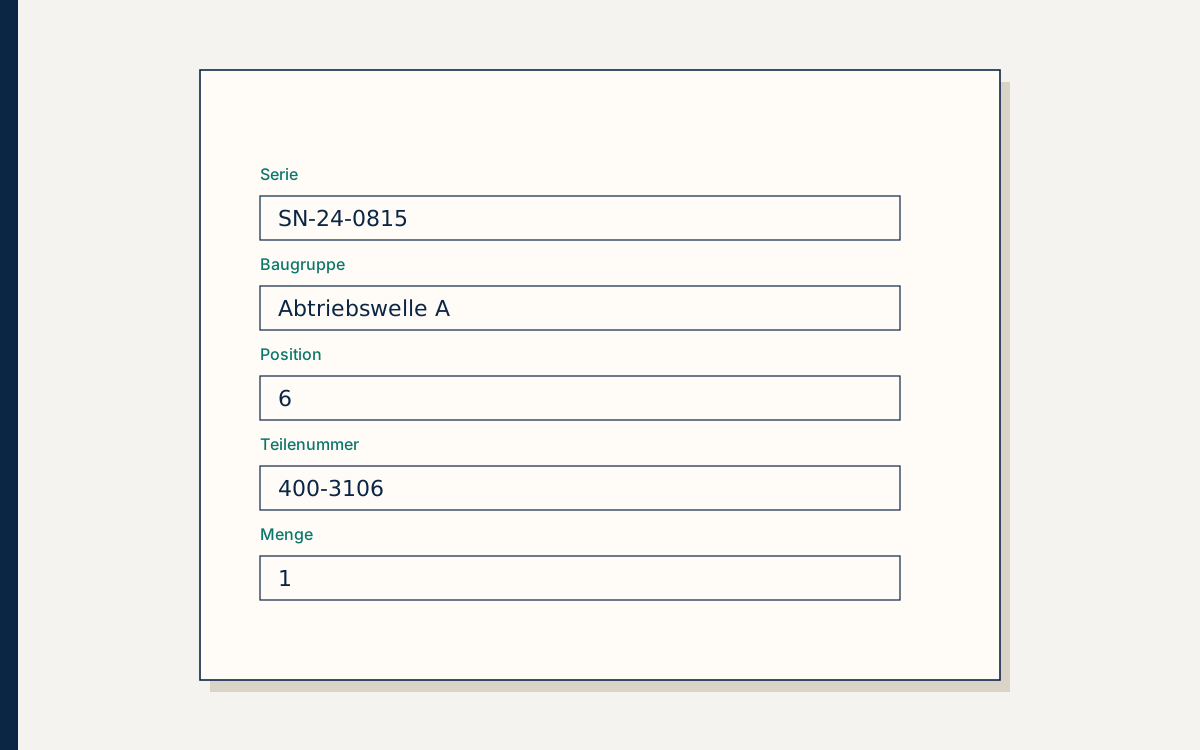
Inquiry
What a spare-parts request has to contain
Serial number, assembly, position, part number, quantity. Whatever is missing turns into a question back.
By Clemens Jonathan Schmid7 min read
Documentation
The same machine, two drawing revisions
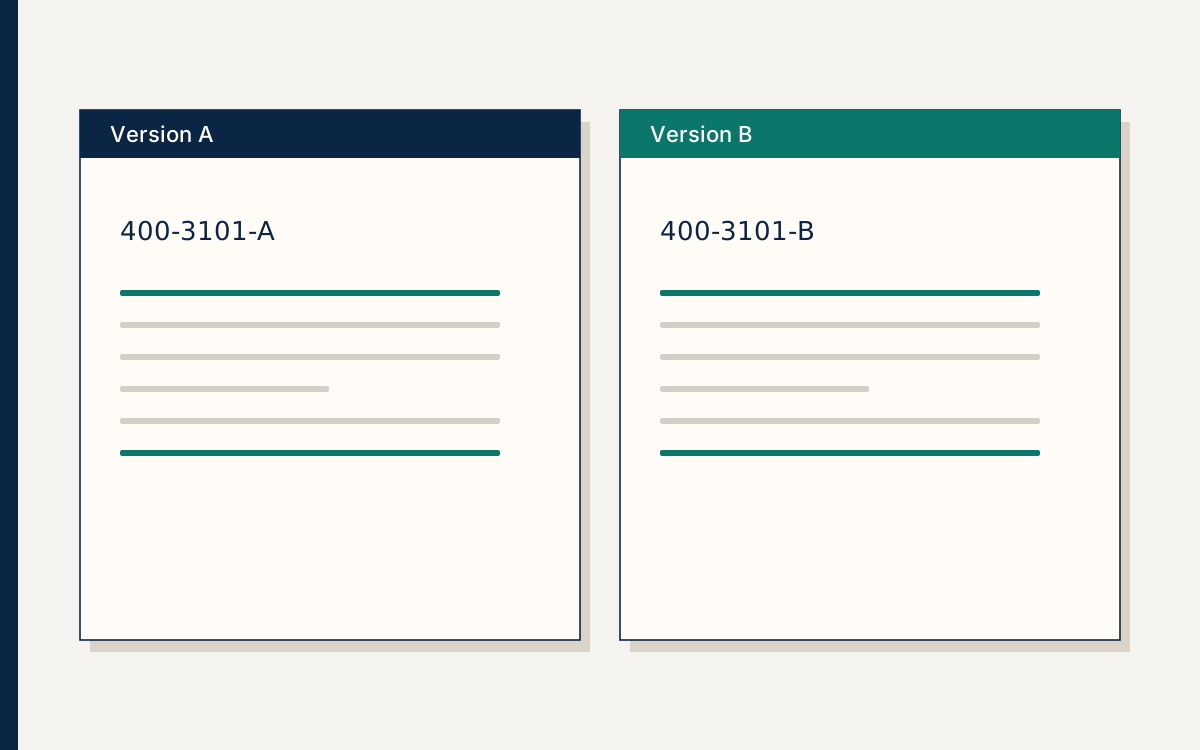
Two drawing revisions follow the serial ranges, and a retrofit in the field has to be written into the release.
By Clemens Jonathan Schmid9 min read
Documentation
When a part number has been superseded
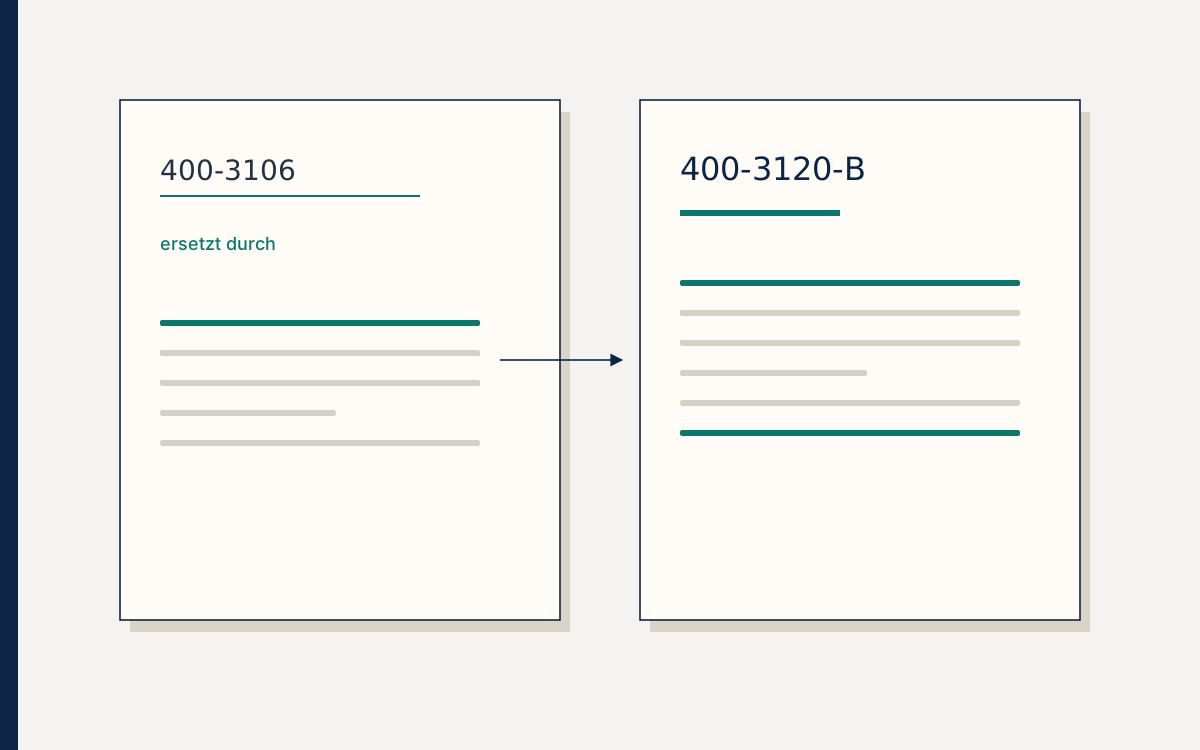
The old number stays findable, the successor sits beside it, and the series record shows which machine already carries the new revision.
By Clemens Jonathan Schmid7 min read