
Documentation
When a part number has been superseded
The old number stays findable, the successor sits beside it, and the series record shows which machine already carries the new revision.
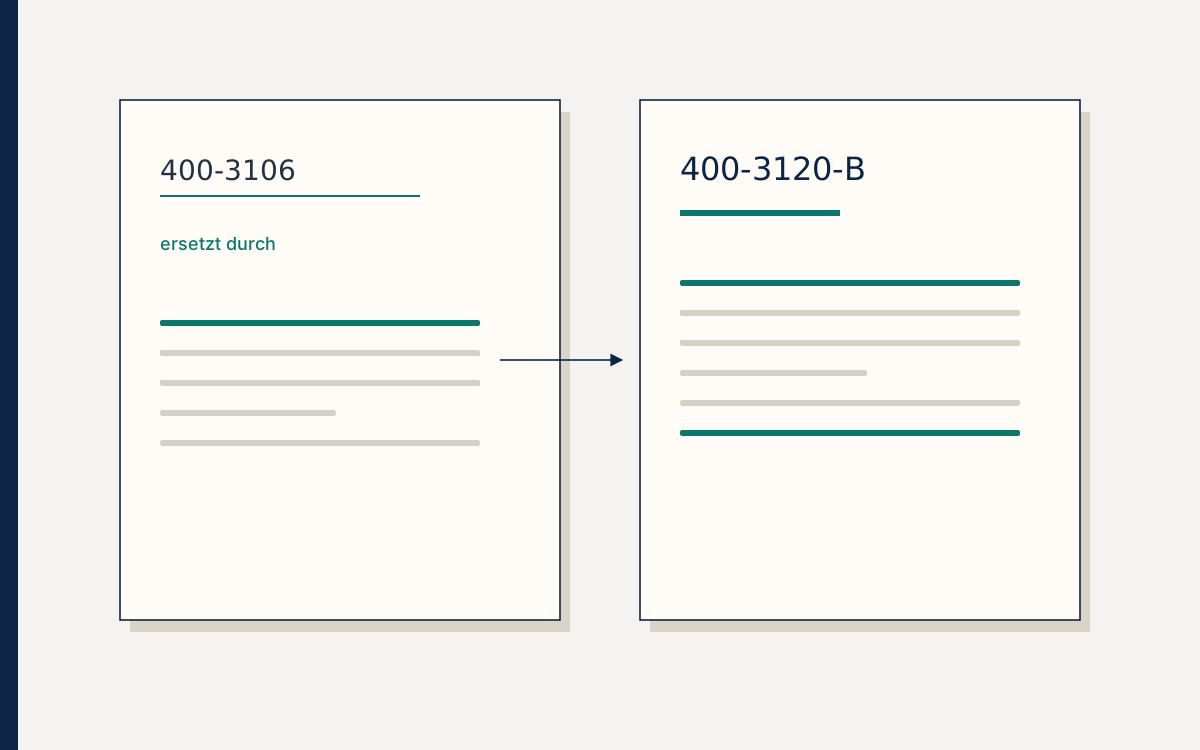
Parts are superseded because they break, because the supplier changes, or because a series needs a different geometry. The new number is progress for design. For the customer it is a disruption, when their drawing shows the old number and your warehouse issues the new one. The disruption becomes a complaint when nobody says the sentence that joins the two numbers.
The sentence is short. This number is superseded by that one. It belongs at the position, not in a circular that the customer's purchasing files away and the fitter never sees. The fitter sees the drawing. So the sentence stands there, in a color that informs and does not warn. An alarm tone for an ordinary successor is the wrong tone. The customer has done nothing wrong. They read the number that is printed on their sheet.
Do not delete the old number
Delete the old number from the list, and everyone who still has it on a label, in an email, or on an old sheet searches into empty space. They conclude that the part no longer exists, and they look for a copy. The part does exist, under the new number, or it exists as remaining stock you can still supply. Both outcomes require that the old number points somewhere.
The reference is not a second truth. It is an arrow. Whether you offer the old part or the new one depends on the series, the warehouse, and whether the successor fits mechanically. The quotation answers that. The drawing only says that a successor exists and what it is called. A portal that quietly replaces the old number with the new one, without the sentence, orders past the customer. They see a different number from the one they typed, and they do not trust the line.
Which series already has the new revision
Not every machine receives the successor. From a given serial number it is fitted. Before that it is not, and individual machines have been retrofitted. The drawing of the individual machine should show the revision that machine has. The machine before the threshold sees the old number, with the note about the successor, if you also offer the successor there. The machine after the threshold sees the new number. Two sheets, one story. One sheet for everyone, with an asterisk in the footnote, is the story nobody reads.
Write the exceptions into the release, not into the memory of inside sales. Inside sales changes. The release stays. A field retrofit that lives only in a notebook is invisible at the next inquiry. You then offer the part the sheet shows, and the sheet knows nothing of the retrofit.
Remaining stock is a warehouse question
Sometimes the old number is still on the shelf, and the successor has a lead time. That is a good reason to keep offering the old number, to the machines it fits. It is not a reason to keep it on the drawing as the only valid number once design has superseded it. Warehouse and drawing may contradict each other, as long as the quotation resolves the contradiction. The drawing must not hide the contradiction by swallowing one of the two numbers.
Say the sentence on the sheet. Decide in the quotation. Keep the old number. That is the whole discipline, and it costs less than the parcel that comes back because two people meant two numbers and both were sure.
How the sentence can look on the sheet
The sentence does not need a page of its own. Beside the position stands the number the machine carries today, and under it or next to it the reference: superseded by, with the new number and the designation, if the designation changed as well. The position itself stays. The customer pointed at the place that sits on their machine. What changed is the key in the warehouse, not the place on the sheet.
The tone is that of a piece of information. Gray is enough. A red frame says "error", and the customer made none. They read what you showed them when the machine was delivered. If the successor carries a different designation, write both designations. "Seal" and "seal kit" are two articles for purchasing. For the fitter they are often the same hole. The sentence stops the fitter from treating the note as a second position and ordering both.
More than one successor happens. Number A becomes B, B becomes C, and all three are still in the field. A chain that names only the latest number lets A run into empty space. Show the next step, not the whole ancestry in one balloon. Whoever comes from A sees B. Whoever comes from B sees C. The file may know the whole chain. The sheet of the machine shows the step that applies to that machine.
What the quotation does with it
The sheet says that a successor exists. The quotation says what you will deliver. Those can be three different sentences, and all three are allowed as long as they fit the series.
You deliver the successor, because it fits and it is available. You deliver what remains of the old number, because it fits and it is on the shelf. You deliver neither of them at once, because the successor has a lead time and the remainder does not fit this series mechanically. The third sentence is uncomfortable, and it is still better than a part that fits "approximately". Approximately is the sentence the customer sends back with the parcel two weeks later.
In the quotation, write the number you are charging and the number the customer named, when the two diverge. Otherwise their purchasing looks for the line and does not find it. The email that arrives with you should already carry both numbers, plus the note that one supersedes the other. Inside sales then does not have to reconstruct the link from memory. Memory is good on the day the same clerk opened the case. It is poor on the day someone else opens the email.
Label, delivery note, old email
The old number lives on outside your drawing. It stands on a label on the part that was removed, in a delivery note from eight years ago, in an email the customer uses as a template. You cannot rewrite those places. You can only make sure that, when the number arrives with you, it has a reference.
That is why deleting is the expensive option. The customer searches, finds nothing, and concludes that the part no longer exists. The copy then only needs the shape. Your new number would have been the answer, if the old one had pointed somewhere. A search field that knows the old number and leads to the position does that job. A search field that knows only today's master data does not. The drawing and the search have to give the same information. Two answers are the phone call again.
The same discipline applies inside the house. A superseded number is not given to a new, different part just because the range looks free. It is not free. Every earlier delivery still occupies it. Recycle it and the reference becomes a lie: the same digits, two parts, and "superseded by" points at something that already means those digits another way. New parts get new numbers. Old numbers stay old numbers, with an arrow, until nobody asks. That outlasts a project. It is still the shorter list.
By Clemens Jonathan Schmid
Related articles
All articles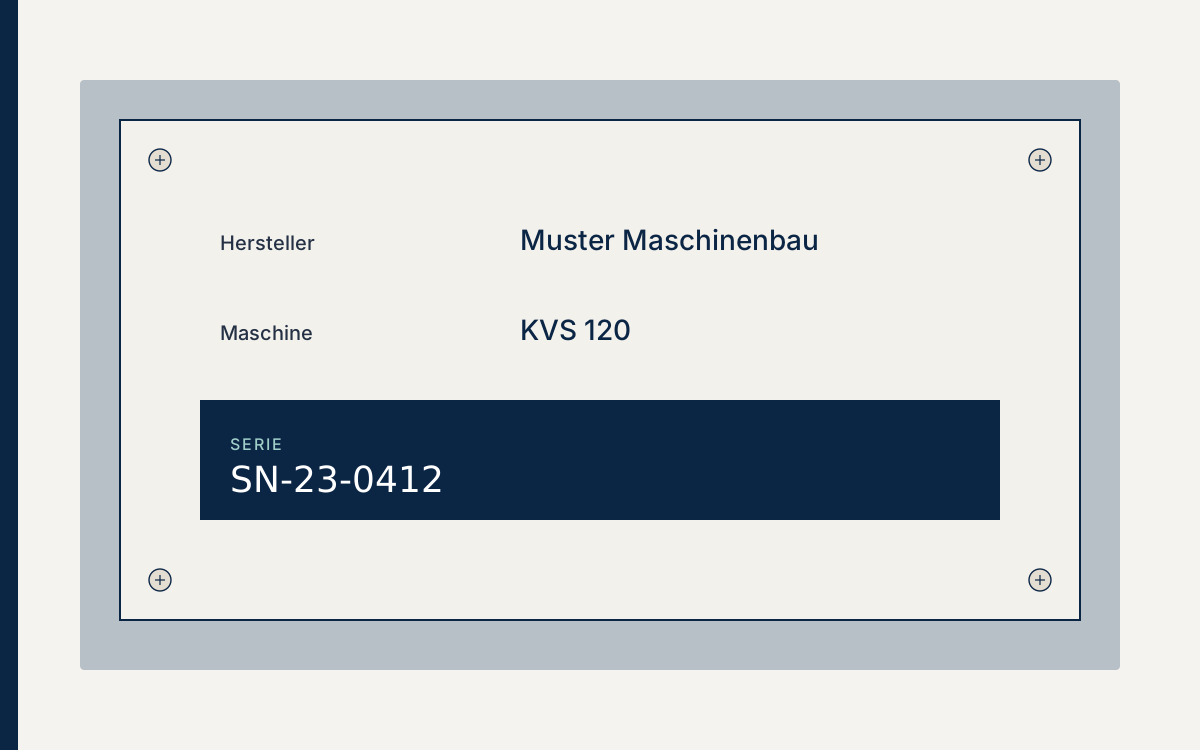
Documentation
The nameplate is the start, not the part number
The plate carries the manufacturer, the type, and the serial. The part number of the wear part is almost never on it.
By Clemens Jonathan Schmid6 min read
Documentation
The serial number opens the right drawing
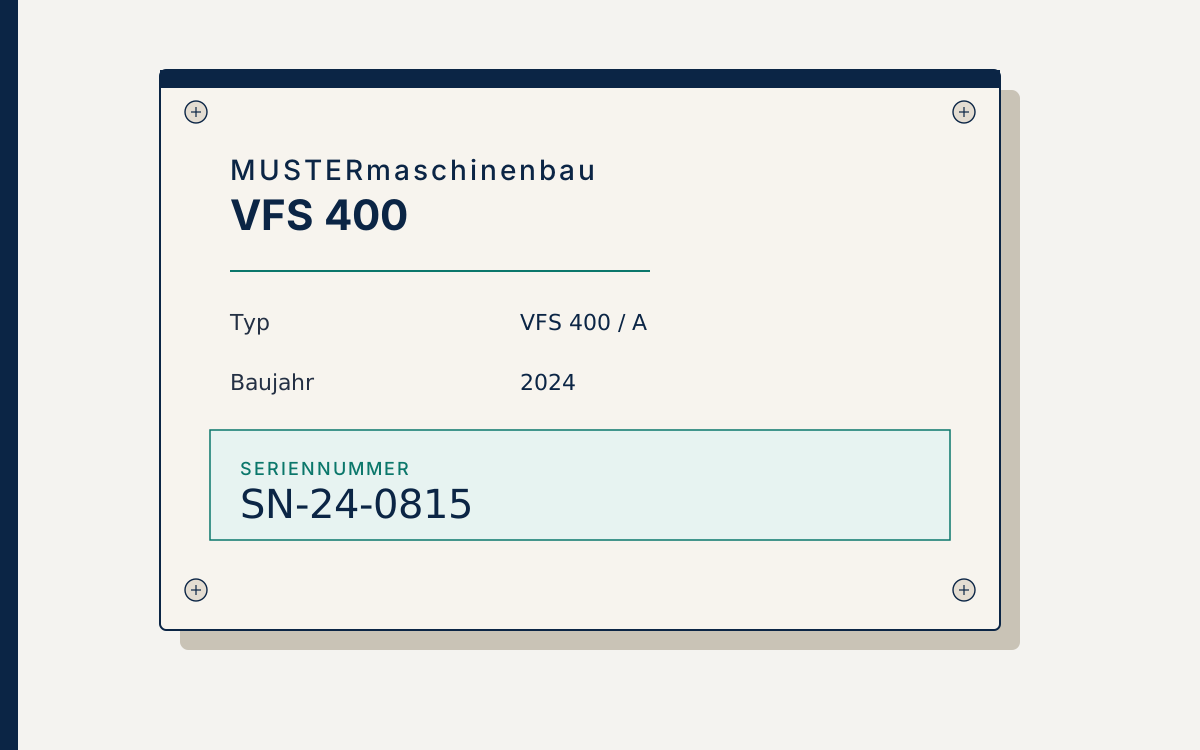
The type name is the family. The serial number is the machine in front of the customer, with the drawing revision that belongs to it.
By Clemens Jonathan Schmid5 min read
Documentation
A position and a part number are not the same thing
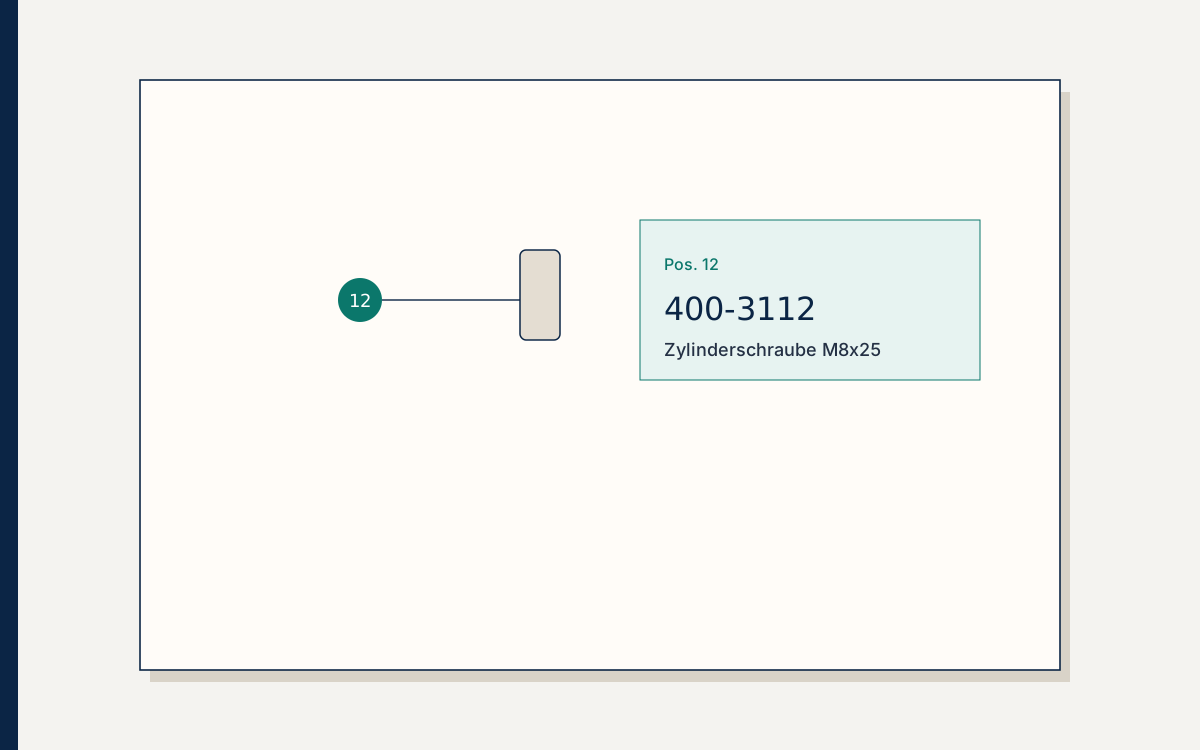
The position applies on one sheet. The part number applies in the warehouse. Mix them up, and people order the number they saw first.
By Clemens Jonathan Schmid8 min read