
Documentation
The serial number opens the right drawing
5 min read
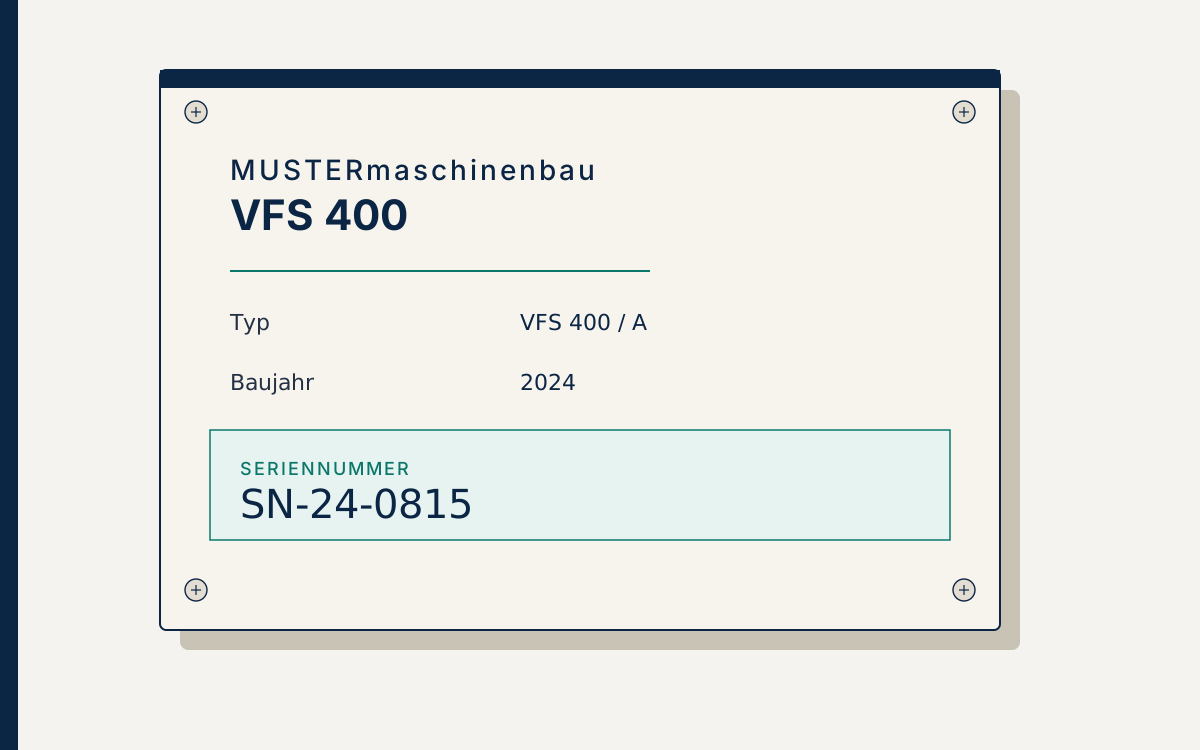
A nameplate carries several lines. The manufacturer's name, the type designation, sometimes a voltage, a year of build, and a serial number long enough that nobody likes typing it. What often arrives in the request is only the type designation. It is shorter. It sits in the email signature at purchasing. It sounds like the machine. It is the family. The machine that is missing a part is a single device, with a particular drawing revision.
Two machines of the same type are not the same spare-parts problem. Changes sit between them: a longer heater bar, a different knife, a guard that fits differently from a certain number on. Send the type designation, and you send the question to all of those revisions at once. The desk then has to ask which machine it is. The serial number would have been the answer before the question was put.
What the number has to do
In your records, the serial number has to point at one set of assemblies. Not at a folder of everything that ever belonged to the type, but at the drawings released for this device. Machine A sees the cross seal at revision A. Machine B, built later, sees revision B, because the bar is different. Outwardly they share a name. Inwardly they differ at exactly the place that wears.
If that link is missing, the serial number is only an engraving. A portal will not help, because it can open only what you have placed behind the number. The work is the list: which serial numbers see which assemblies. It does not have to be complete on the first day. It has to be right for the machines you release. A gap in the list is better than a polite fiction that shows every device the same drawing.
Some customers do not have the serial to hand. The plate has been painted over, the folder is at the other plant, the machine was bought second-hand. Then the type is the way in, not an excuse to invent the number. You mark that the number is missing, and you work with what is there until the number follows. An invented serial assigns the device to the wrong drawing. That is worse than an honest question mark.
Year of build and the invoice are not enough
The year of build narrows the field. It does not decide it. Changes run inside a single year. The invoice names the type and perhaps an order number. The order number can lead to the serial, if your file allows it. It is a detour, not a replacement. The direct route is on the plate at the machine, on the line nobody otherwise types, because it is awkward.
The reverse is awkward too: a serial written differently in three systems, with a hyphen, without a hyphen, with a leading zero that is sometimes missing. The match has to live with those spellings, or the customer will not find their machine and will type the type instead. The rule for that belongs in the upkeep of the list, not in a lecture to the technician about being more careful. The technician is standing in gloves in front of a plate that is twenty years old.
One number, one drawing, one request
When the serial number opens the drawing, the rest is a short path. The customer sees the assemblies of this device, not the catalogue of every year. They tap the position. The request carries the serial number, so that later you know which machine needed the part. That is useful for warranty, for the history, and for the next change. It is not a way of watching the customer. It is the file on the device you built.
The type designation stays on the plate and in the sale. It explains which machine someone bought. It does not explain which knife is in it now. The serial number does that explaining, provided you have attached the drawing revisions to it. Without that work, every conversation about a portal is a conversation about an empty door.
A used machine, and a second plant
A machine changes hands. The plate stays. The folder does not. The new operator knows the type from the purchase contract, and the serial from the plate, if the plate can still be read. Your file is then the only place where the drawing revision is still correct. If the serial is there, you can show them the right assembly without reconstructing the previous owners. If it is not there, the reconstruction starts anyway, only later, and under pressure.
It is much the same when one customer has several plants and the request comes from head office. Head office knows the type, because the type is what the asset list holds. The serial is at the plant, on the plate. A request from head office without a serial is often the politest request and, at the same time, the emptiest. A portal helps only if someone on site types the number. It does not help if head office sends the type and hopes every device is the same.
What you should not infer from the number
The serial number is not a key to everything. It does not say whether the customer pays, which warehouse holds the part, or whether a technician must travel. It says which released drawing belongs to this device. That limit is useful. Turning the number into an automatic price, an automatic stock figure, or an automatic credit means building a different system. For the request, the link is enough.
The order of the numbers should be read with care as well. A higher number was often built later, but not every change follows the number without a gap. There are pilot builds, exchange machines, and retrofits in the field that never show in the running number. The list of links has to be able to hold those cases, as an exception a person has set. A bare rule, "from number X, sheet B applies", is a good beginning and a poor ending once the field no longer matches the file.
Keep the exceptions where the release sits. An assembly becomes visible for a serial when you release it, not when the number is higher than a threshold nobody checks any longer. The threshold may be the suggestion. The release stays the step. A field change that breaks the sequence still needs its own release on that serial, even when the number looks too early for the sheet. The person at the machine does not know your threshold. They know the machine in front of them, and the sheet you open has to be that machine.