
Spare parts business
People who cannot find the position order somewhere else
6 min read
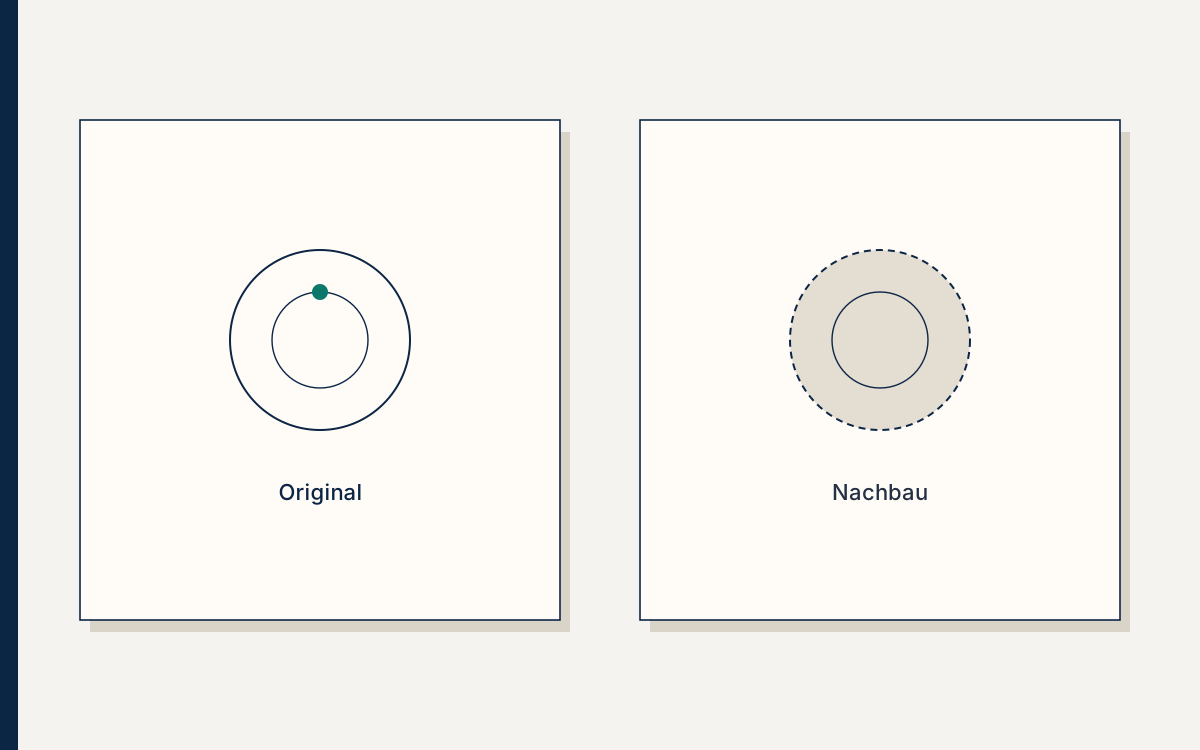
A wear part has a shape that can be copied. A facing, a knife, a strip, a seal. The shop that copies it does not need your series or your bill of materials. It needs a sample or a dimension. The customer already holds the sample: the worn part. If they cannot learn from you which number that sample carries, the way to a copy is short, and the way to you is a description nobody can match.
That is not a complaint about the customer. They have a stopped machine and a part. They are under no duty to guess your drawing number. The duty to make the original nameable sits with the company that built the machine. Leave it unnamed, and you leave the naming to whoever offers the shape.
What a copy does not know
A copy knows the form it can see. It does not necessarily know the material, the hardness, the clearance for contact with the product, or the change you introduced after a serial range because the first design broke. Sometimes none of that matters, and the part does its job. Sometimes it is the reason the station is down again three weeks later. Then the customer calls anyway, with a part that did not come from you, and asks why the machine will not take it.
You can rarely answer that question with a ban. The customer may buy where they like. You can answer it with the drawing, before the question arises. The drawing shows the part you specified, in the serial standing in front of them. It shows the successor, if there is one. It does not take the business of the customer who buys elsewhere on purpose. It takes the business of the customer who buys elsewhere only because they did not know what to ask you for.
Hiding the number, or pricing it automatically
Some houses hold the part number back because they fear the customer will compare the price. The customer compares without a number, by the shape. The number makes the comparison sharper, and it makes your quotation possible. A quotation they cannot request loses the comparison without a contest. The price itself does not have to sit on the drawing. It sits in the quotation you make against the request, with the margin this part is meant to carry. "Price on request" is not a hiding place. It is where the price belongs, as long as it is not the same for every serial.
An automatic low price on the website is the other extreme. It forces every special number into a figure that is wrong for that number. Hiding the number and printing an automatic price both walk past the request. The request is the moment you state the price, because then you know which part and which serial are meant.
The drawing should be the normal route
The normal route should run through your position. Normal means this: the technician finds the number, purchasing sends it, you quote. The exceptional route stays open, for the part that is not on the sheet, for the machine with no plate, for the case the release has not reached. The exception may be hard work. The normal case should not be.
If the normal route today is a phone call with a description, you have already made the copy shop the normal counterpart, even if you never mention it. They only have to offer a shape faster than you can find a number. The number is in your bill of materials. It only has to stand on the position the customer hits.
What the customer has in hand
They have the worn part. They have a dimension if they took one, and often they have none, because the line is down and the tape measure is in a cupboard. They have a photo that shows the break and does not show how the part sits. With that material, someone who needs no number can offer a shape. With the same material, your spare parts desk can sometimes recognise the part and sometimes cannot. The drawing turns that material into a position. Without a drawing, it stays a conversation about a shape.
The customer is not being careless when they buy elsewhere. They are slow when they wait for a number you still have to search for yourself. Downtime has a clock. The clock does not care that the bill of materials sits in a folder only engineering will open. If the number is on the position they hit on the phone, your answer is as fast as their tap. If it sits in the folder, the copy is faster, without being better.
There are parts where the shape is enough and the material can be swapped. There are parts where a different hardness, a different clearance for the product, or a changed geometry after a serial range makes the difference. You do not have to explain that to the customer as a threat. You have to show them the part you specified for this serial, including the successor if the first design has been superseded. The decision to buy elsewhere anyway remains theirs. The decision to withhold the original was yours, and it came first.
Show the number. Leave the price off the sheet
The part number on the drawing is not a price comparison you lose the moment it appears. The customer who wants to compare will compare the shape without a number, or will put your quotation and someone else's in the same email. What they cannot do without a number is request your quotation without first spending half an hour on a description. The number makes the request possible. The price is decided in the request, not before it.
A fixed price label on every position would make the original easy to order and would price every exception wrongly. A special dimension, remaining stock, a minimum lot, a part you buy in: the desk sets different figures for those. The sheet sets one. As long as the figures are not the same for every serial, the figure belongs in the quotation. "Price on request" is then the honest sentence, not a hurdle meant to wear the customer out. A hurdle would be hiding the number and making them describe the shape. Holding the price until the line is right is the normal way of working.
The normal route needs a released position
A number only the desk knows is not a number for the customer. It becomes one when it stands on the sheet their serial opens, and when that sheet has been released. Until then the phone call stays the normal route, and the copy shop stays the fast counterpart. That is not a law of the market. It is what follows from a drawing that sits in the building and never arrives at the machine.
Release first the assembly that is asked for most often. That one sheet changes the normal route for exactly those parts. The other assemblies stay describable, laborious, and honest as not yet released. A customer who hits the position at the released station, and still has to call about the other one, learns the difference once. After that they order the original where you have made it nameable, and they describe only where you have not.