
Documentation
A position and a part number are not the same thing
8 min read
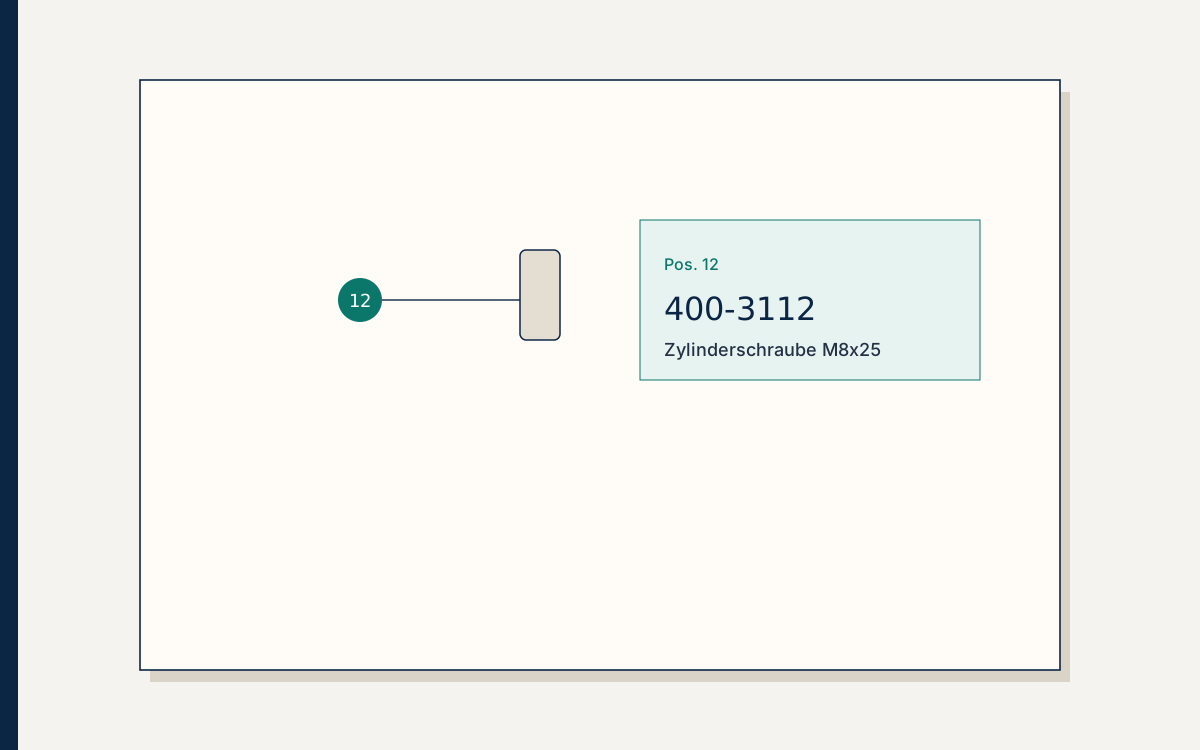
On the drawing, a 6 sits in a circle. Beside it in the bill of materials is a number shaped like 400-3106, and a description. That figure only shows what a part number looks like. It is not a real customer's part. The email sometimes brings the 6, sometimes the long number, sometimes the description, and sometimes all of them jumbled with "as discussed". For the customer those are three ways of saying the same thing. For the warehouse they are three keys, and only one opens the bin.
The position is a place on one sheet. It is short so it fits in the balloon. The same 6 on another sheet is a different part. Even on the same sheet, another revision can move the 6 if someone reissues the numbers and the bill of materials does not follow. A position with no sheet and no revision is a small number carrying a large mistake.
The part number is the name of the part in your system. It outlives the sheet until you supersede it. Purchasing, the warehouse, and production share it. The customer usually does not carry it in mind. They have it when they have read it off the bill of materials, or when an old label is still on the part they removed. That label may be the predecessor.
What the mix-up looks like
The customer reads the 6 and calls it the part number. Your system has no part number 6, or it has one that belongs to a screw from another area. The desk notices, or it does not. In the second case a parcel leaves that nobody ordered, and the right part stays where it is.
Or the customer reads the part number off a similar machine. The number is real. The part exists. It does not fit their serial. The request looks complete. It is complete for a different machine. Only the serial number would have shown the contradiction, and the serial was not in the email.
The description alone is the third trap. "Knife" exists at the cross seal, at the longitudinal seal, and sometimes on a cutter ahead of both. Three knives, three numbers, one word. The position on the right assembly settles it. The description only confirms what the position already said.
The line should carry both numbers
The request carries the position and the part number. The position says where the customer tapped. The part number says what you will supply. If both are there, a person can check that they belong together. If only one is there, the check is missing. That is why the drawing should not go out as a picture without a list, and the list should not go out as a table without a picture.
If the part number has been superseded, both stay visible: the one on the customer's sheet, and the one that replaced it. The position does not change. The customer tapped the right place. What changed is what you build or stock today. Painting that as the customer's error, in a colour that looks like an alarm, is unnecessary. A note is enough.
Giving out numbers is continuous work
New positions appear when the sheet grows. Old ones die when a part is dropped. The temptation is to reuse a number, because the 6 has come free. Reuse saves a digit and spends the history. A request from two years ago that says "position 6" then means two parts, once the date is ignored. Leave the number alone. A new position gets a new number. A dropped number stays in the file, marked as dropped, not as free.
The part number follows the same discipline. A superseded number is not handed to the next part. It remains the old number, with a pointer. Recycle numbers, and every old email becomes a trap.
The customer does not need to know this discipline. They need to tap a number that is valid on their sheet. That a part number sits behind it, and that you do not change that number lightly, is your work. The work is invisible when it holds, and very visible when a parcel comes back.
What the customer sees, and what the warehouse needs
The balloon is there for the eye: a small number, a circle, a line to the part. It should not carry more. A part number in the balloon is unreadable on a phone, and it tempts people to copy the long number and drop the position. Both belong on the line, in different places. The balloon supplies the position. The list that opens when the position is hit supplies the part number and the description. The customer confirms the line. They should not have to type the long number from memory, and they should still see it, so they recognise it on the quotation.
The warehouse opens the bin with the part number. Picking by position 6 is safe only if the sheet is there and everyone knows which sheet. On the floor it often is not. So the request that reaches you carries the part number along with the 6. The 6 stays, because it shows where the number came from. Without the 6, nobody can check that the customer hit the right line. Without the part number, the warehouse cannot resolve the 6 without the sheet. Both numbers, one line.
The description is the third item, and the least sure. It helps the reader picture the part. It is not a key. Two names for the same part, one from engineering and one from the warehouse, do happen. Show the name on the sheet, and let the warehouse keep its own wording internally, as long as the part number is the same. Do not change the sheet description in silence so it matches the warehouse word. The customer has the old wording on the last quotation. A new word, with no new revision, looks like a different part.
The same number on two sheets
Position 6 on the cross seal and position 6 on the drive are two places. Someone who only says "6" has named neither. The request needs the assembly, and the serial that selected the sheet. Otherwise the 6 is a small number with a large mistake again. In the file those are columns, not a clever sentence: serial, assembly, position, part number. Drop one as spare, and you reopen the mix-up the sheet had just closed.
A position can also move inside one assembly, if a new revision reissues the numbers. Do not do that in passing. A new revision is a new sheet for the serials that carry it. Older serials keep the old numbers. An email from two years ago that names position 6 must still mean the same part against the sheet from then. If you can no longer show that sheet, you can no longer check the email. Keeping it is not a taste for tidy files. It is how an old request stays understandable.
The part number may move to a new revision when the part is superseded. Then the old number and the new number stand on the line, and the position stays. The customer pointed at the right place. The key in the warehouse is what changed. That is a note, not a fault, and it belongs beside the position, not in a footnote that shows up only on the engineering print.