
Documentation
The nameplate is the start, not the part number
The plate carries the manufacturer, the type, and the serial. The part number of the wear part is almost never on it.
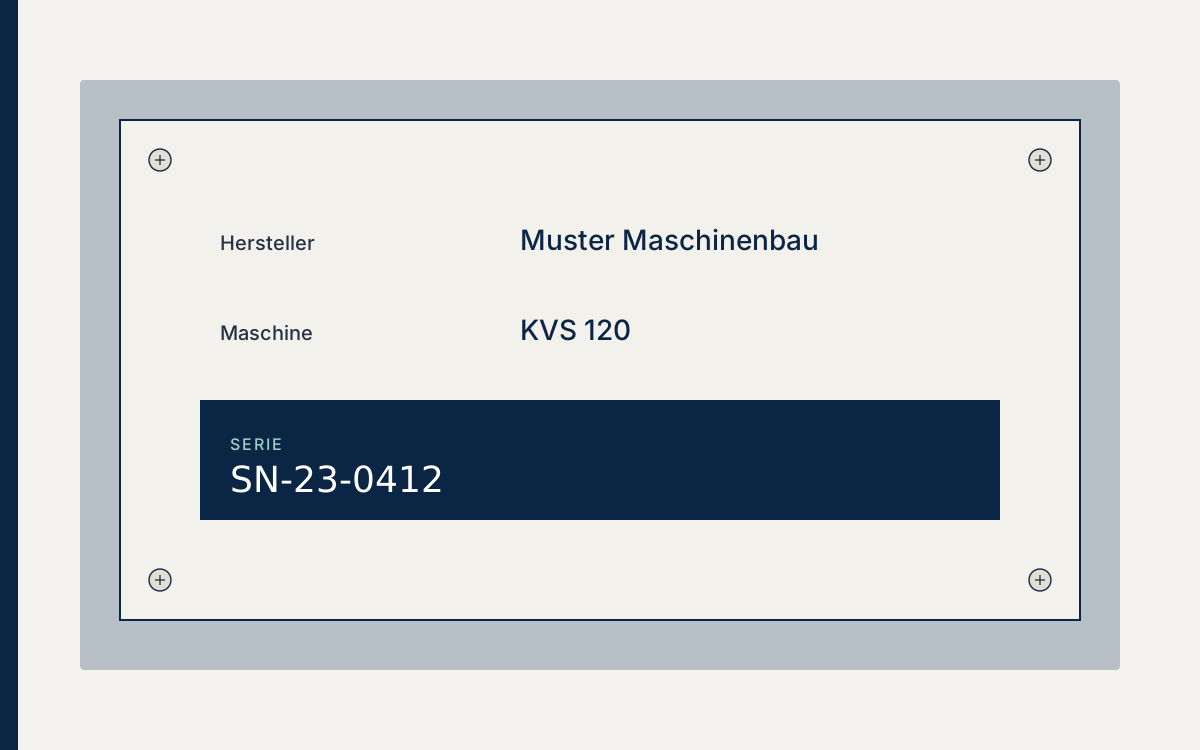
The nameplate sits on the machine, often on the frame, sometimes behind a door, sometimes under a film of product and cleaner. It is the most reliable inscription the device carries about itself. Reliable does not mean complete. The plate says who built the machine, what the type is called, and which serial number this one carries. As a rule it does not say the part number of the facing that has just worn through.
Technicians still photograph the plate and send the photo as the request. The photo is valuable. It is the beginning. It is not the position. Treat the photo as the whole request, and you have the serial, then you go looking for the part all over again. Throw the photo away because it is "only a plate", and you throw the serial away, then you look for longer.
What you can read off, and what you cannot
Read the serial number character by character, hyphens and zeros included. Read the type, so that a clash with the serial shows if the plate was swapped or the photo is of the machine next door. Read the manufacturer, in case the customer runs lines from several builders and the email lands in the wrong mailbox. Do not read off a part number that is not there. Inventing one, so the photo will not look "incomplete", is the expensive reflex.
The year of build on the plate narrows the field. It does not stand in for the serial. Two machines from the same year can be at different revisions, and a machine can have been rebuilt without the plate showing the year of that work. The plate records the placing on the market. It is not a service history. The history, as far as the drawing is concerned, is with you.
Plates age. A digit is gone, another has been written over, the photo is crooked. The honest reply is to mark the uncertain spot and ask, not to pick the most likely number. The most likely number is often the number of the machine beside it, the one photographed last week. The machines stand side by side. So do the plates.
From the plate to the drawing
Once you have the serial, the drawing you released for this machine opens. The technician does not need an office for that. They are already standing in front of it. The phone that took the photo of the plate can take the number typed in as well. That extra step is small next to the call in which they describe the plate and you cannot find it, because a digit was swallowed.
Set the path up so the number is the only thing they have to copy off the plate. Type and manufacturer can sit there as a check. The part number comes afterwards, from the position, not from the plate. Ask for both at once, and you are asking for something the plate does not hold. What comes back is a guess.
When there is no plate
Some machines no longer have one. What is left is the type, the order number from the purchase, a photo of the line, and the memory of a technician who still knows the machine. That path is slow, and it stays allowed. It should be recognisable as slow: a mark that the serial is missing, rather than a serial somebody has filled in from memory.
The slow path gets rarer when the plate stays readable and the number has a place where it opens something. A plate that leads nowhere will be painted over in the end, because it never helped anyone. A plate that opens the drawing has a reason to stay legible. You supply that reason when the number is on your list, and the list shows a drawing that belongs to the machine.
Character by character
Serial numbers look alike, so every character counts. A zero and the letter O, a hyphen and a space, a digit in shadow. The technician reads what they see. The desk writes what it hears. Both can be right and still mean two machines. Copying from the photo is safer than dictation, and an uncertain character stays uncertain. A gap is better than a filled-in digit that opens the machine next door.
The type on the plate is the family, not this machine. Two machines of one type can have different revisions, assemblies, and successors. Open the drawing by the type and you open a family, then guess which member was meant. Open it by the serial and you open the machine. The type is the check. If it disagrees with the serial, something is wrong: the wrong photo, a swapped plate, a number from memory. Ask before a position is ordered.
Year of build and the order can confirm. They do not choose the sheet. A machine rebuilt in the field still shows the year it was delivered, and it now carries the revision of the rebuild. The plate knows nothing of that work unless you changed it, and most builders do not. The rebuild has to sit in the release for this machine. Otherwise the serial opens the old revision, which is wrong for this one.
The photo, and what follows it
The photo of the plate stays useful after the number has been typed. It shows that someone stood at this machine, and it shows the state of the plate if a digit is argued over later. It does not replace a tap on the position. The sequence that fails is a familiar one. The photo goes to the desk. The desk finds a drawing and sends a PDF. The technician photographs the PDF with a finger on one spot. The desk guesses the position. Three handoffs, and the number the warehouse needs appears only in that last guess.
The shorter sequence lets the number open the sheet while the technician is still there. They tap the position, set the quantity, and send the request. The plate photo can be attached. It no longer has to be the whole request. The part number comes from the list behind the position, not from a line someone thought they saw on the plate. Plates sometimes carry extra codes, for the electrics, an inspection, or the customer's asset list. Those are not the part number of the facing. Treat one as if it were, and you order the code.
When the number leads nowhere
Then the honest answer is that this serial has no released drawing with you. Not a drawing of the type that might be close enough. The technician can still send the request the slow way, with a description and a photo of the part. Afterwards you can put the serial on the list, if the machine is yours and the document exists. You should not quietly tie it to a neighbouring sheet so the phone has something to show.
A plate that once led nowhere will not be photographed next time. The technician remembers that the number opens nothing, and goes back to describing. The link from serial to sheet is not filing at the edge of the day. It is why the plate has a job past the day the machine was placed on the market. That day required the plate. Service gives it a second job: open the right drawing, and otherwise, honestly, open nothing.
By Clemens Jonathan Schmid
Related articles
All articles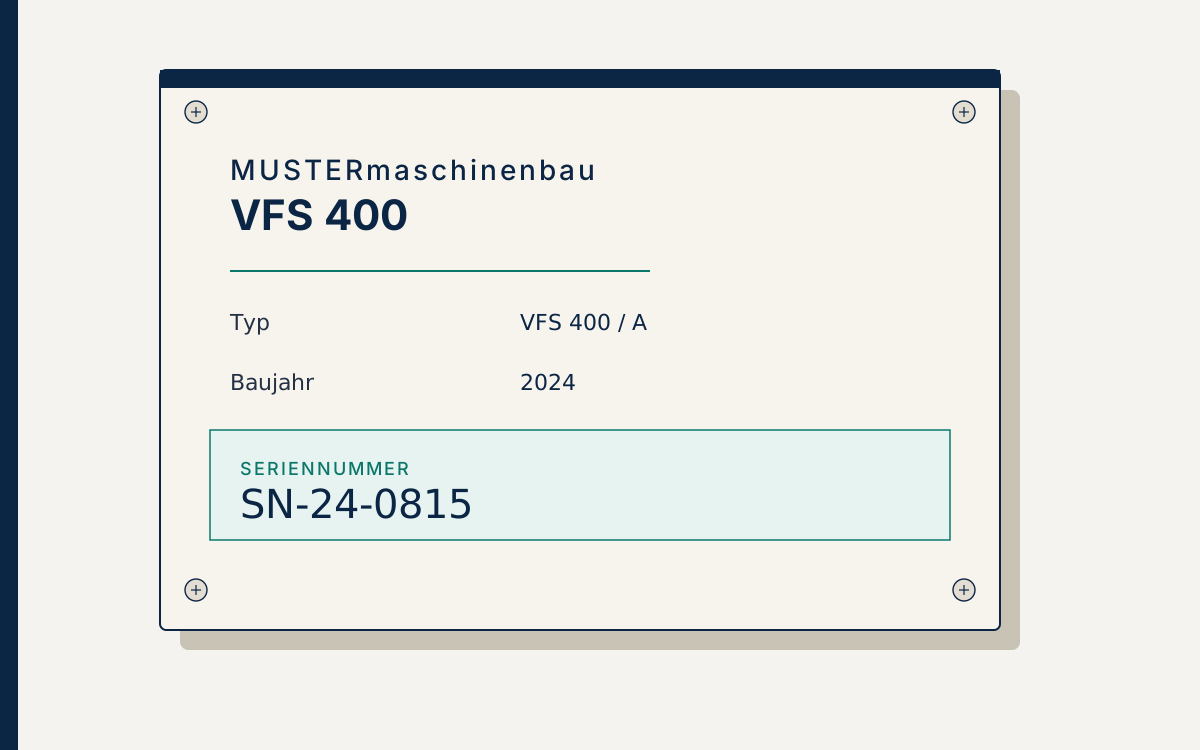
Documentation
The serial number opens the right drawing
The type name is the family. The serial number is the machine in front of the customer, with the drawing revision that belongs to it.
By Clemens Jonathan Schmid5 min read
Documentation
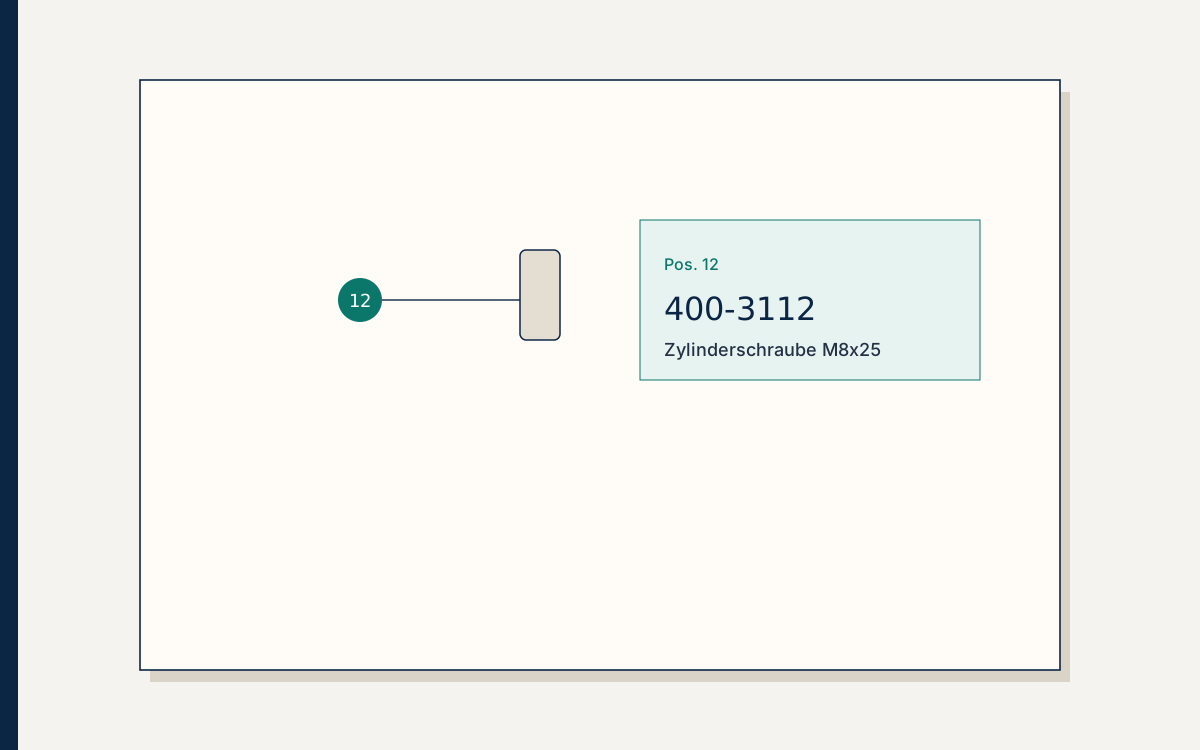
A position and a part number are not the same thing
The position applies on one sheet. The part number applies in the warehouse. Mix them up, and people order the number they saw first.
By Clemens Jonathan Schmid8 min read
Documentation
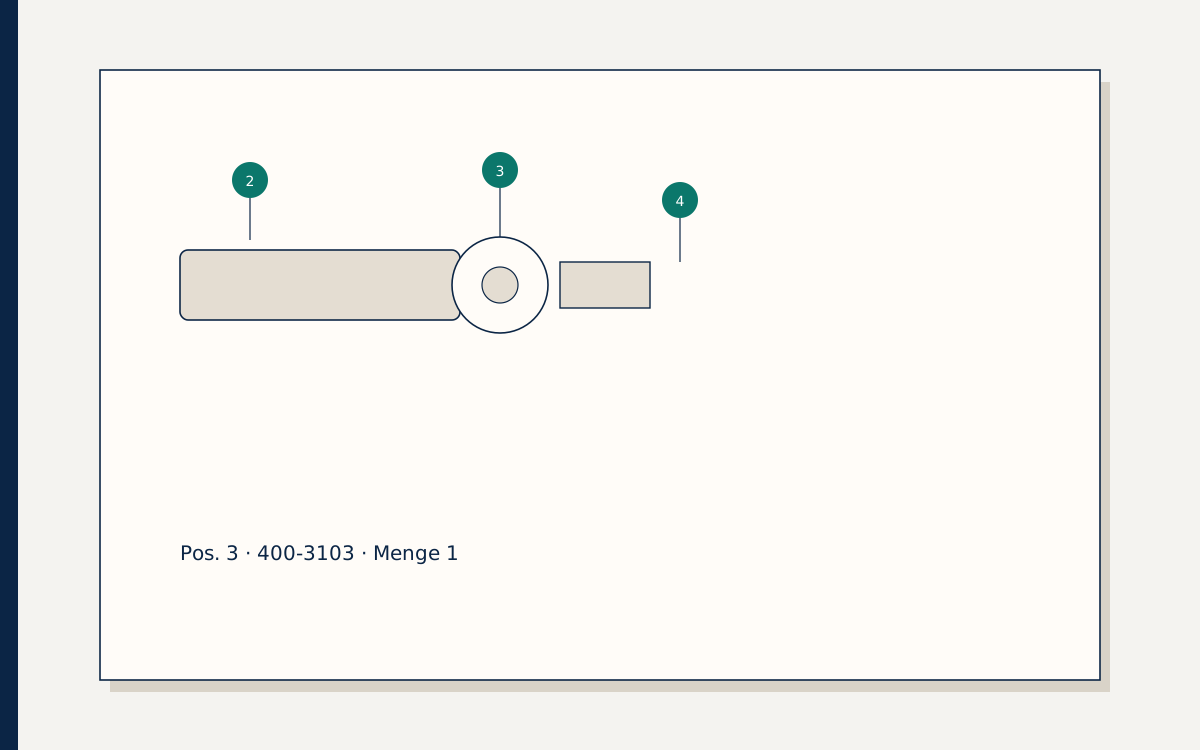
The exploded view is the ordering path
Position numbers, a bill of materials, and a leader line that does not cross. That is how a drawing becomes an order.
By Clemens Jonathan Schmid5 min read