
Documentation
The same machine, two drawing revisions
Two drawing revisions follow the serial ranges, and a retrofit in the field has to be written into the release.
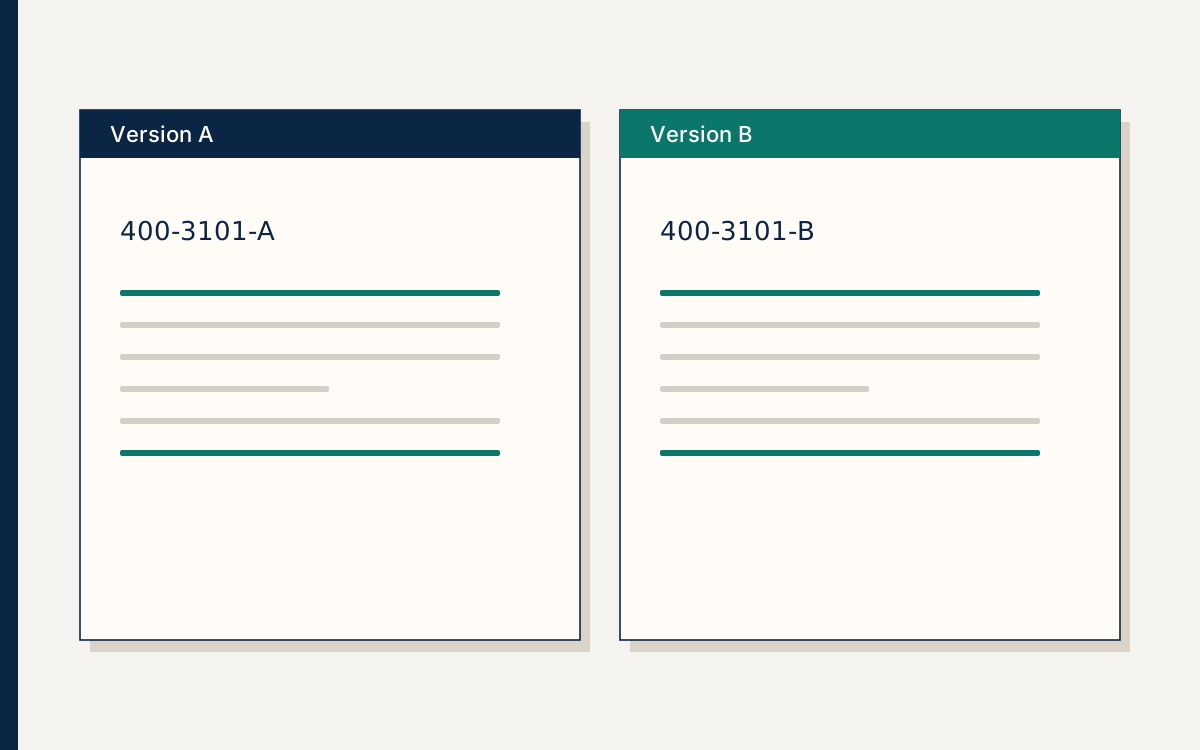
Two machines of the same family stand side by side. The type on both nameplates matches, the colour matches, and anyone in the aisle takes them for one model. The fitter opens the front flap. On the left, the short heating bar, the hood held by four screws. On the right, built some numbers later, the bar is longer and the hood is split differently. The asset list shows the type twice. Purchasing's mail names that type and a leaking bar. Two exploded views sit on the inside-sales desk. Both are right for some machine of that name. Only one is right for the machine that is standing there.
The type is the family
The type designation is the family name. It appears in the brochure, on the order, and in the signature when purchasing writes. It says which concept the customer bought. It does not say which sheet is inside this machine. Between the first and the last machine of a family, changes accumulate that never enter the name: a different bar, a different knife, a guide that sits differently from a certain serial onward. In sales it is correct to speak of the same machine. At the spare-parts desk that sentence is wrong, because it collapses two revisions into one request.
Send the type and the question goes to both sheets. Inside sales has to ask which machine it is. The serial on the nameplate would have answered that before the question was asked. It is longer. It is still the key, because only the serial means this one machine. The type means the range. The range holds revisions, and the revisions hold different parts under similar names. Year of build only narrows the field. Changes run inside a year, and two machines from the same year can need two sheets.
The serial selects the sheet
The serial opens the exploded view released for that machine. Not the folder of every year, not the neighbouring sheet, not a blend of both revisions. Machine A sees revision A. Machine B sees revision B. Both carry the same type on the nameplate. From the outside they share a name. At the place that wears, they differ.
The link runs through ranges. From this number to that one, sheet A applies; after that, sheet B. That is a usable start, because production often changed that way: from a given number, the build changed. It is not a rule you may hand the release over to. A range is what the file knows. The release is what this customer may see on this machine.
Not every change follows the number without a gap. There are pilot machines that already have a geometry the running series only receives later. There are replacement machines whose number comes from another block and which still carry the newer revision.
A plain rule, "from this number, sheet B applies", is therefore the proposal, not the conclusion. The proposal saves work while the field matches the file. The moment the field diverges, the proposal becomes the wrong drawing, and a wrong drawing is worse than a missing one. A missing drawing produces a call. A wrong one produces a parcel.
A footnote does not carry the second revision
Putting both revisions on one sheet, and parking the difference in a footnote, saves a file and costs the request. The footnote says which serials take the short bar and which take the long one. The customer at the machine does not read it. He sees two balloons, or one balloon with two numbers, and taps whatever resembles the part in his hand. On a worn bar, resemblance is not safe. The position he hits has to belong to his revision, or the other part goes out.
One sheet per revision, chosen by the serial, removes that choice. He opens his machine and sees the bar that is in it. The mark leads to one part number, not to small print. Alternatives belong in the quote, when a successor makes sense for this case. They do not belong under the picture used to name the part. The same position can mean two parts on revision A and revision B, if the numbers were given out again. Without the sheet the serial selects, the short number is the neighbour.
The retrofit has to be in the release
A retrofit in the field changes the revision without changing the serial number. Service has swapped the short bar for the long one, changed the hood with it, and put the report in the file or in a notebook. On the sheet tied to the serial, the old revision from production is still what you show. The next request opens that sheet. The customer taps the position. If the sheet shows the old revision, he orders the old part. The old part no longer fits. It comes back, or it is fitted and the station stops again.
The report in the file is not enough if the release does not know it. The person on inside sales who picks up the request on Friday does not have a job from two years ago in mind. What remains is the sheet. The error is then not in the tap. It is in the assignment.
Write the retrofit into the release. For this one serial, the sheet of the new revision applies afterwards, not the sheet of the year of build. Neighbouring serials stay where they are. A retrofit does not silently move the boundary for every later number. It is an exception on one machine. An exception that lives only in the technician's notebook is invisible at the next order. The release remains when the person on the desk changes. A higher serial was often built later. A retrofit makes a low number newer inside than a high number that was never rebuilt. Sort only by the number and you are wrong on exactly these machines.
If the serial later hangs on the wrong sheet, withdraw the release and release the right revision again. A quiet overwrite lets this morning's request point at a sheet that, by the afternoon, no longer exists in that form. The customer should see the revision you will stand behind, or not see the assembly for a while. Two truths on the same day make the line in the mail useless, because nobody can say which sheet produced the part number.
What the request then contains
Once the serial has selected the sheet, the request carries the revision. Nobody has to write it into a sentence. The line holds serial, assembly, position, part number, name, and the quantity the customer sets. If the number is superseded, the successor is noted beside it. That is information, not an error. The old number stays findable, because the customer read it on his sheet and an old label may still carry it. The quantity comes from him, not from the bill of materials. The line goes to inside sales as email or CSV. It does not book, it does not set a price, and it does not write into the ERP.
The type stays on the nameplate and in sales. It explains the family. The serial explains which sheet is in this machine. Only the release explains an exception the field has set. If that exception is missing, the next order delivers the production revision, and on a retrofitted machine that revision is the wrong one.
By Clemens Jonathan Schmid
Related articles
All articles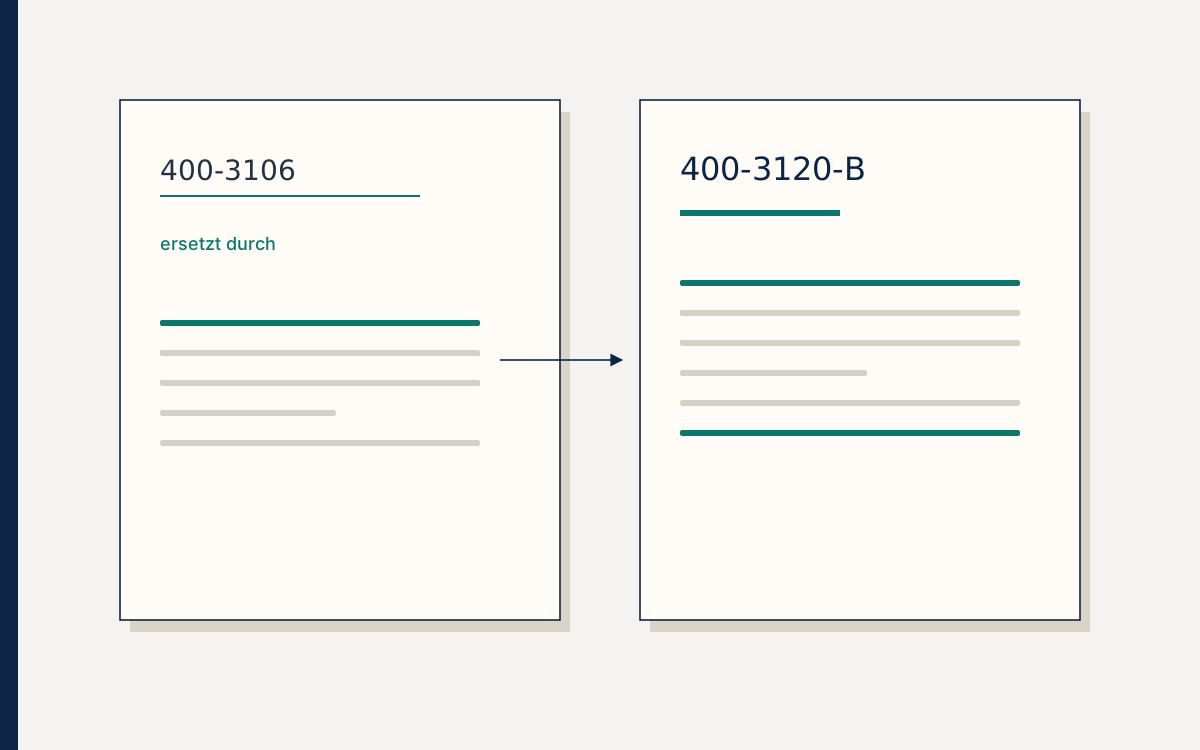
Documentation
When a part number has been superseded
The old number stays findable, the successor sits beside it, and the series record shows which machine already carries the new revision.
By Clemens Jonathan Schmid7 min read
Documentation
The nameplate is the start, not the part number
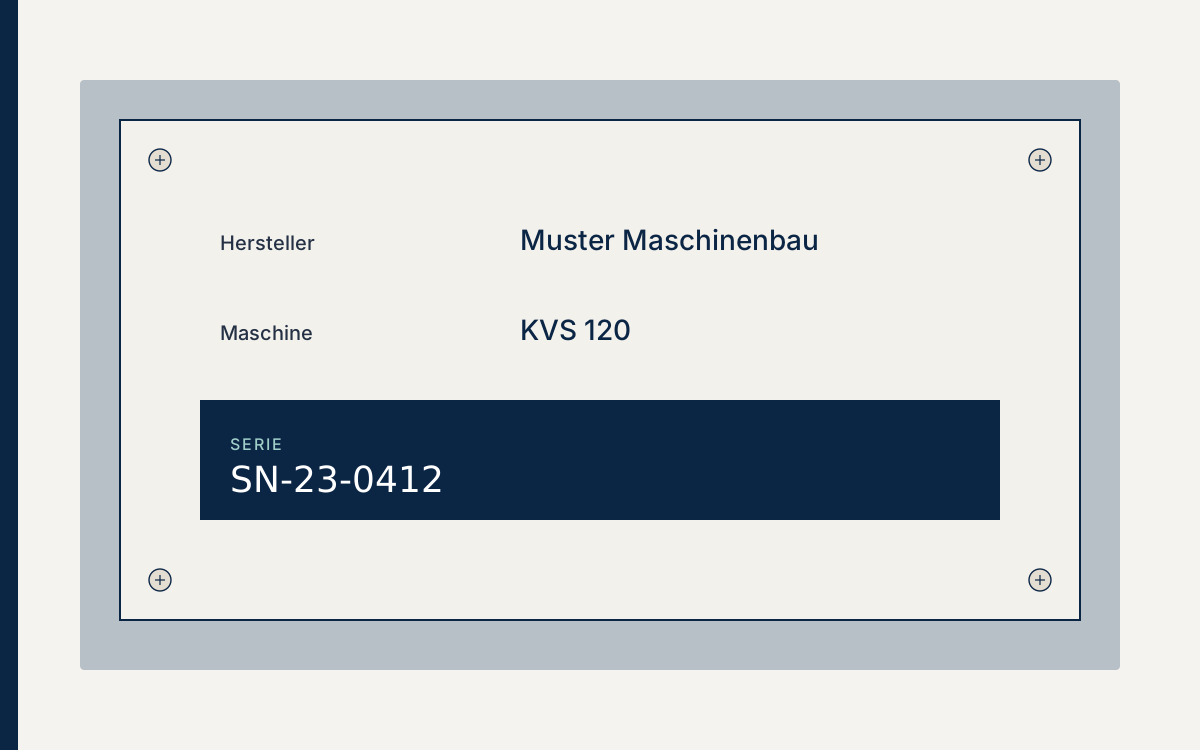
The plate carries the manufacturer, the type, and the serial. The part number of the wear part is almost never on it.
By Clemens Jonathan Schmid6 min read
Documentation
The serial number opens the right drawing
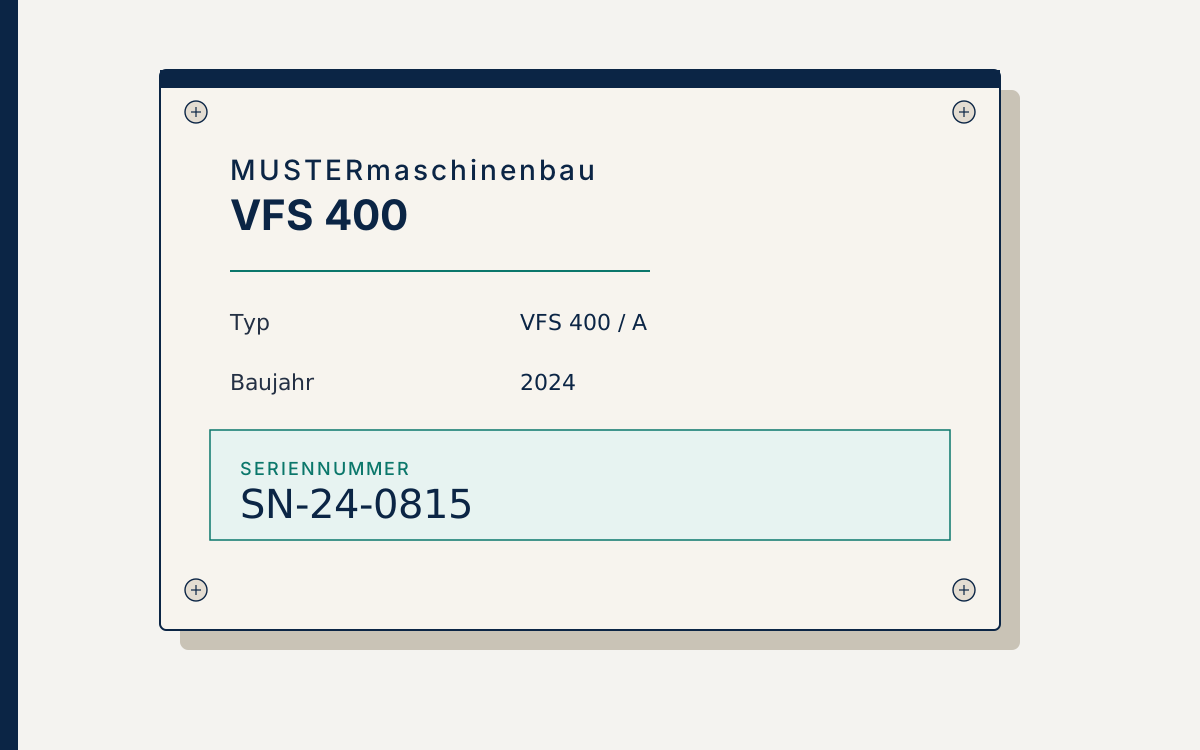
The type name is the family. The serial number is the machine in front of the customer, with the drawing revision that belongs to it.
By Clemens Jonathan Schmid5 min read