
Documentation
A position you can tap
A tap on the balloon names the position on the sheet for this serial, and the person sets the quantity.
The technician stands side-on to the machine. The phone is in the right hand. The left braces on the guard, clear of the film. The screen shows the exploded view of the open assembly. They want the heater bar. Three circles sit close, numbered 11, 12 and 14. The thumb covers all three. They enlarge the view until one circle is as wide as the thumb, tap 12, and the list jumps to the description and the part number. They set the quantity to one and send the request. The line is already starting again. They have ordered nothing. They have shown which position is meant.
For the desk, that is the difference between a number and a description. The number comes from the balloon on this serial's sheet. The tap should hit the right number, and the person should read the line once more before sending.
The balloon is the target
On an exploded view the position number is a circle with a digit in it. A leader joins the circle to the component. In the design office the circle is called a balloon. With the customer it is called the number, or the position. That number has to be tappable. Hatching, a centre line, and the note in the margin are there for orientation. They are not the target.
Make the whole face of the part the target, and you create ambiguity. A housing touches three neighbours. A finger on the surface might have meant 8 or 9. The balloon carries one number, and that number stands in the position column of the bill of materials. The tap belongs on the balloon. The part surface must not quietly shift it onto the neighbour.
The leader from the balloon to the part has to stay readable. It says which geometry belongs to the number. Too fine, or ending in a knot, and the person can no longer match the number to the part. Readable means the line arrives at the part, visible at arm's length. An 8 and a 6 that become the same shape on the glass are no longer a position.
Point at the sheet without signing in
The technician on the line rarely has an account with you, and will not create one while the shift waits. An account makes sense for repeat orders, stored addresses, and old cases. For the first move, pointing at a position, signing in is a barrier. It shuts out people at the machine who want to send a number within a few minutes.
The serial number on the nameplate opens the drawing of the build that was fitted. Someone without the serial does not open the sheet for this machine. A password only checks whether anyone still remembers what purchasing set up years ago. That memory is in the office. The position is at the machine.
No account does not mean no sender. Name, company, and the address for the quotation are entered when the request is sent. That is the head of the message, not an account. The tap on the position does not depend on an account being added later.
A thumb needs area
On a phone the pointer is a thumb, wider than a mouse pointer, and it hides what it hits. If two balloons sit closer than that width, the person hits the wrong one and cannot see it in the moment. They see it when the line in the list changes. Then they correct it, or they send the neighbour. Both are avoidable when the hit area is large enough and the balloons have space between them.
A sheet squeezed onto the screen as a whole page turns every number into a dot. A thumb in the hall, with glare on the glass and often a glove, cannot hit a dot. The drawing has to enlarge until a circle is as wide as the thumb. The digit stays readable. Enlarging must not change the position number.
The mark ties the hit to one number, even when the tap sits a little off, as long as it is closer to this balloon than to the next. Tap the line in the list, and the balloon on the drawing has to stand out. Drawing and list are two views of the same position. Miss one direction, and the check against the part in the hand is gone.
The number lands in the request
The tap writes the position number into the request. With it come the details attached to that position, because you released the assembly: the assembly, the part number, and the description. The serial number is already fixed, because it opened the sheet. The quantity is not fixed yet. The bill of materials knows how many times the part is fitted. It does not know how many the customer wants now.
That is why the person sets the quantity. One, because a belt has torn. Two, because the second should be changed at the next stop. The fitted quantity may sit beside the field, as a hint. It must not be the silent value that travels with the request when nobody has touched the field.
The request goes out as email or CSV: serial, assembly, position, part number, description, and the quantity that was set. No price. No booking. The desk turns the line into a quotation, and the price stands there. On the sheet, prices stay on request. If the thumb hit the neighbour, the technician sees the description before sending. Without that line they would send a bare number.
The tap does not place an order
A button that says "Order" after the tap promises a step Partmira does not take. There is no payment, no write into your ERP, and no reservation in the warehouse. The request leaves as an email or a file. Someone on your side reads it and decides: a quotation, a call back, or a question, because the serial looks different in your records.
For the technician, that is enough in this minute. They want the part named. Payment terms are not something they see on the glass. A checkout would be another project. The tap collects the position and does not ship anything. It shows a line, and the line shows a balloon. Without that link, the finger is only a finger on a picture.
What you settle before the first tap
A tappable position does not appear because a PDF sits on a server. Someone places the mark on the balloon, checks that the number has a line in the bill of materials, and releases the assembly. Before that release the customer does not see the sheet. A mark on a number with no line is a tap into empty air. A list with no mark is a table again, and the technician has to copy the number out by hand.
A position you cannot identify does not get an invented part number, just so every circle can be hit. A balloon that cannot be tapped is more honest than a balloon that writes a guessed part into the request.
In the demo, one such sheet belongs to the fictional Muster Maschinenbau GmbH, on the VFS 400 vertical form-fill-seal machine. The company does not exist. If you want to try the same gesture on your own bill of materials, take an assembly that is actually asked for on the phone.
By Clemens Jonathan Schmid
Related articles
All articles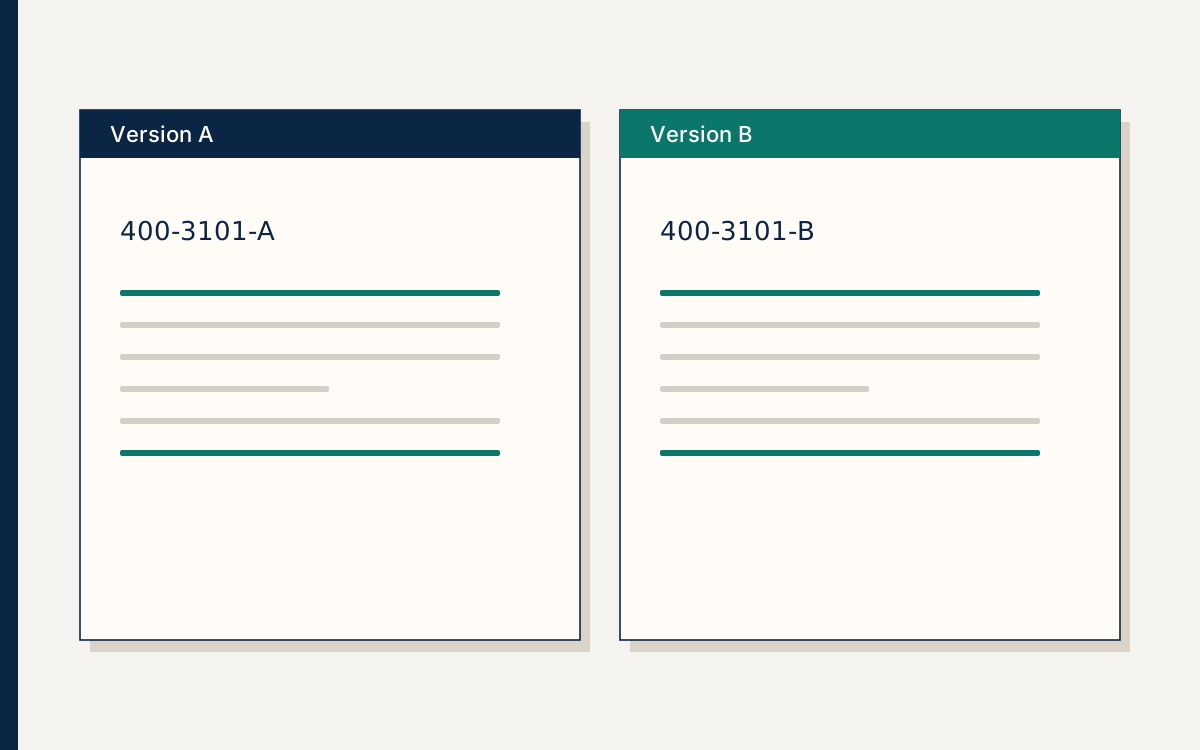
Documentation
The same machine, two drawing revisions
Two drawing revisions follow the serial ranges, and a retrofit in the field has to be written into the release.
By Clemens Jonathan Schmid9 min read
Documentation
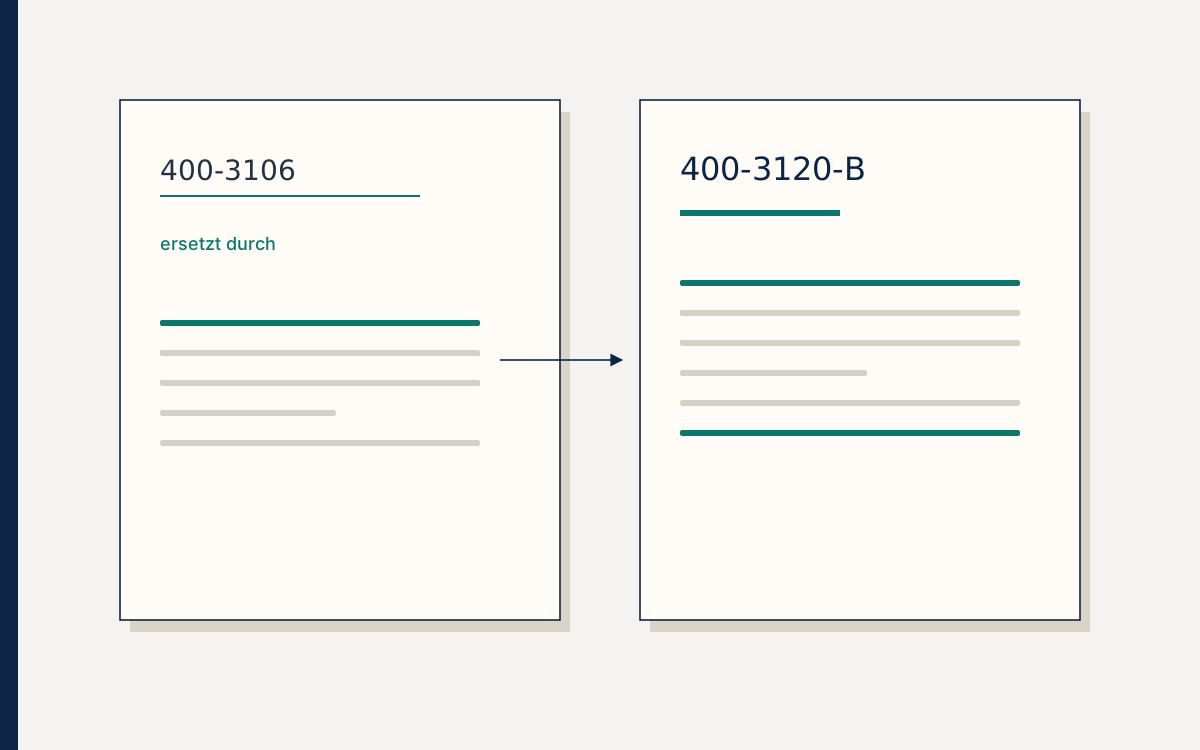
When a part number has been superseded
The old number stays findable, the successor sits beside it, and the series record shows which machine already carries the new revision.
By Clemens Jonathan Schmid7 min read
Documentation
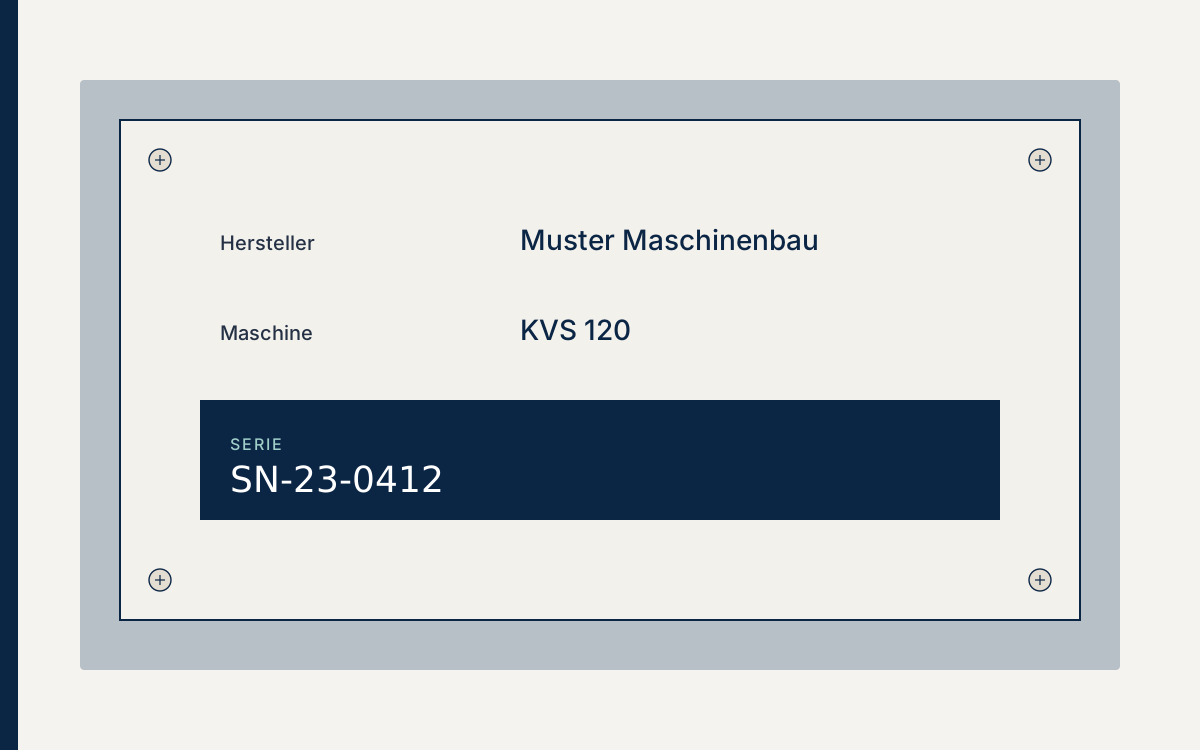
The nameplate is the start, not the part number
The plate carries the manufacturer, the type, and the serial. The part number of the wear part is almost never on it.
By Clemens Jonathan Schmid6 min read