
Inquiry
Phone, PDF, email: the position is missing
Phone, PDF, and email arrive without the position number on the sheet that belongs to this serial.
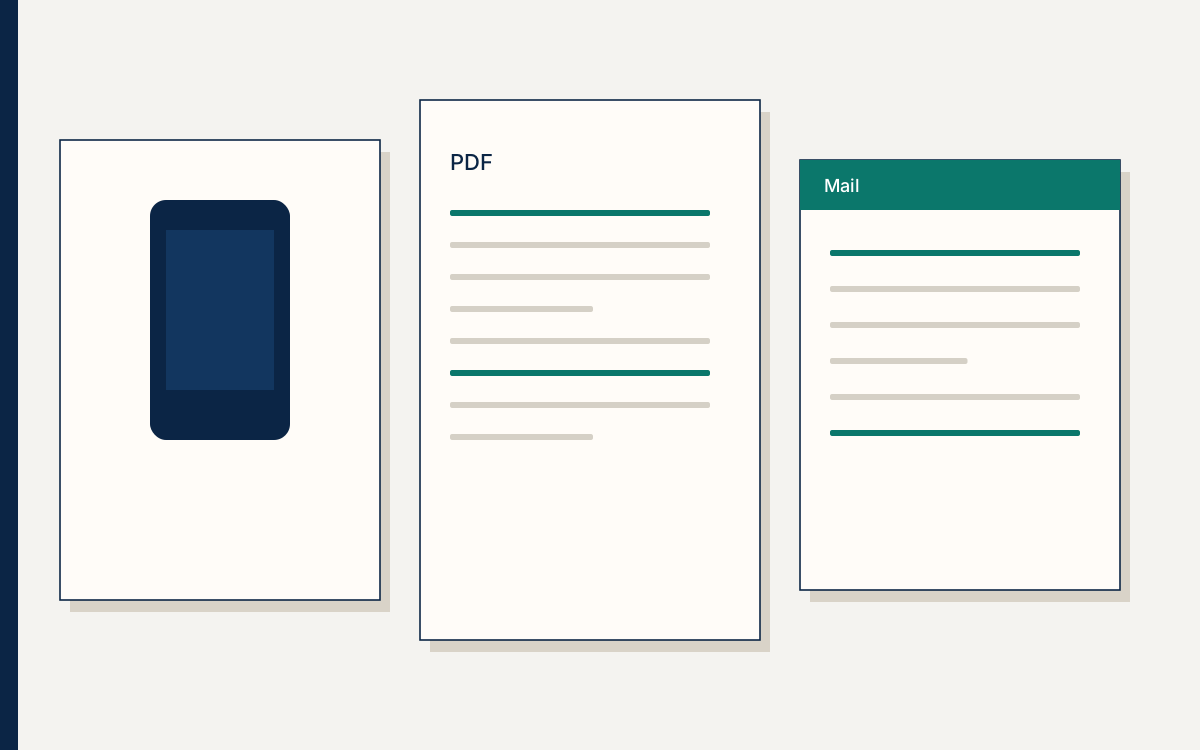
On Tuesday morning three requests for the same machine sit on the desk. A phone note. An email of six lines with a photo of the open station. A PDF whose file name carries the year of build, and whose exploded view has no circle, no arrow, and no handwritten number. All three want a part at the cross seal. None names the position on the sheet for this serial. The desk starts from scratch three times, although the customer meant the same thing each time.
The channel is not at fault. Phone, PDF, and email can carry a request. They do every day, and they will when a portal stands beside them. The missing detail is the number in the balloon on the sheet for this serial. Without it, the rest is a description, a document, or a sentence. The warehouse does not pick a description.
The same gap, three ways in
Each way in brings something the others lack, and each leaves out the number that would make the request usable. The phone note carries the urgency, and often the name of the person at the machine. The PDF, if it is the right sheet, carries every position and still no choice. The email carries the route through purchasing, the address for the quotation, and sometimes a quantity. Together: serial, assembly, position, part number, description, and quantity. Apart, it is half the job, three times.
The desk lays the halves on top of one another. That work is real. It is the missing number, not the caller's impatience. Often the serial is missing too, or it exists only on a nameplate photo nobody has copied down. Without the serial you do not know which sheet applies. With the serial and without the position, you know the sheet and guess the line. Two gaps, easily thrown into one call, and afterwards one is still open. The serial question identifies the machine. The position question identifies the part.
What the phone does not keep
On the phone the caller describes what they see. The long part above the film. The warm one. The one that failed last year, or perhaps the one beside it. An experienced desk recognises some of this because they know the machine, not because the sentence is clear. On a packaging machine, "strip", "jaw", "knife", and "guide" each hit several positions. The caller uses the shift's word. The sheet uses the bill of materials. The two words do not meet by themselves.
The phone can still carry the position if someone reads out the balloon number, spells the serial, and states the quantity. The note then has to hold that number. In practice the sheet is with purchasing and the caller is the technician. They describe, you write, and the number never appears. The file holds a sentence. "The part above the film" is not a position for the next reader. A 12 would be, with the sheet and the serial beside it.
A serial that is only heard is easily shortened by one character. The note looks complete and opens the neighbouring machine. The phone stays right for the shift, the address, and the news that the machine is down. It does not produce a balloon number on its own.
What the PDF carries, and what it leaves
A PDF can be the right sheet, or the revision that shipped with the machine and has sat in purchasing's folder since. The document does not say whether it belongs to this serial. The file name rarely does either. "Cross seal" is a name, not a revision. Two files with that name and different contents are ordinary.
An unmarked PDF shows every position and chooses none. The desk hunts the sheet for whatever the sentence meant, with no view of the machine. It often comes down to two neighbouring balloons, and a question goes back out. The PDF was not empty. It was undecided.
A marked PDF is different. A circle, an arrow, a handwritten 12: someone chose a position. That sheet is more usable than the same sheet with no mark, because the choice is visible. The pen can cover two balloons, and the sheet can be the wrong revision. Those mistakes can be seen. A missing mark is only a full drawing. The PDF often leaves out the quantity too. The lack is not the file format. It is a sheet with no position set, or a sheet that does not belong to this serial.
What email does to the case
Email is how the request enters the company. It can hold the full line: serial, assembly, position, part number, description, quantity, and the address for the quotation. Then it is a good intake. It can also be where the position disappears. The technician sends purchasing a photo with a circle. Purchasing writes a polite email, attaches the clean catalogue PDF, and drops the circle so the mail looks tidy. You receive the polite email. The circle stays in purchasing's mailbox.
Purchasing writes what they take an order to be: a description, a rough quantity, a request for price and date. They take the position for a scribble. For you it is the line, and what they treat as decoration drops out of the mail. "Roughly the middle, on the right" forces the reader to see the attachment as the writer saw it. A number on a line opens the same way everywhere. Free text is right for whatever has no column. It is the wrong place for the number that separates this part from the next.
A position, once set, survives the handoff
A tap on the balloon is a mark that does not stick in a mailbox on the way. The serial has opened the sheet you released for this device. The tap writes the position number. Part number and description hang on that position, because the match was set that way. The person sets the quantity. Email or CSV still carries those fields, with nobody redrawing the circle along the route.
This is not a different rule for the channel. Email remains email. The phone remains right when someone needs a person at once. The PDF remains right when the customer wants to file the sheet. The difference is what arrives. A set position arrives as a number. A described position arrives as a sentence. Some requests start as speech and end on the sheet. Some still need a call, because the delivery address is missing. That call settles the rest. It no longer has to settle which part the 12 is.
The missing number, not the channel
A ranking of the ways in describes a meeting. It does not describe the request. A phone call in which the position was read out, and the serial repeated, is complete. A tap on the wrong sheet is a clean line for the wrong part. The form does not save the content.
Check the missing detail. Is the balloon number from this serial's sheet there? Is the quantity there, set by the person who wants the part? Is the serial readable? What is missing is missing in the note, the PDF, and the email in the same way. What is present should stay, even if you dislike the channel. Price and lead time go on the quotation afterwards. The other channels stay in use for everything else. You no longer guess which position the sentence meant, once the number is on the line.
By Clemens Jonathan Schmid
Related articles
All articles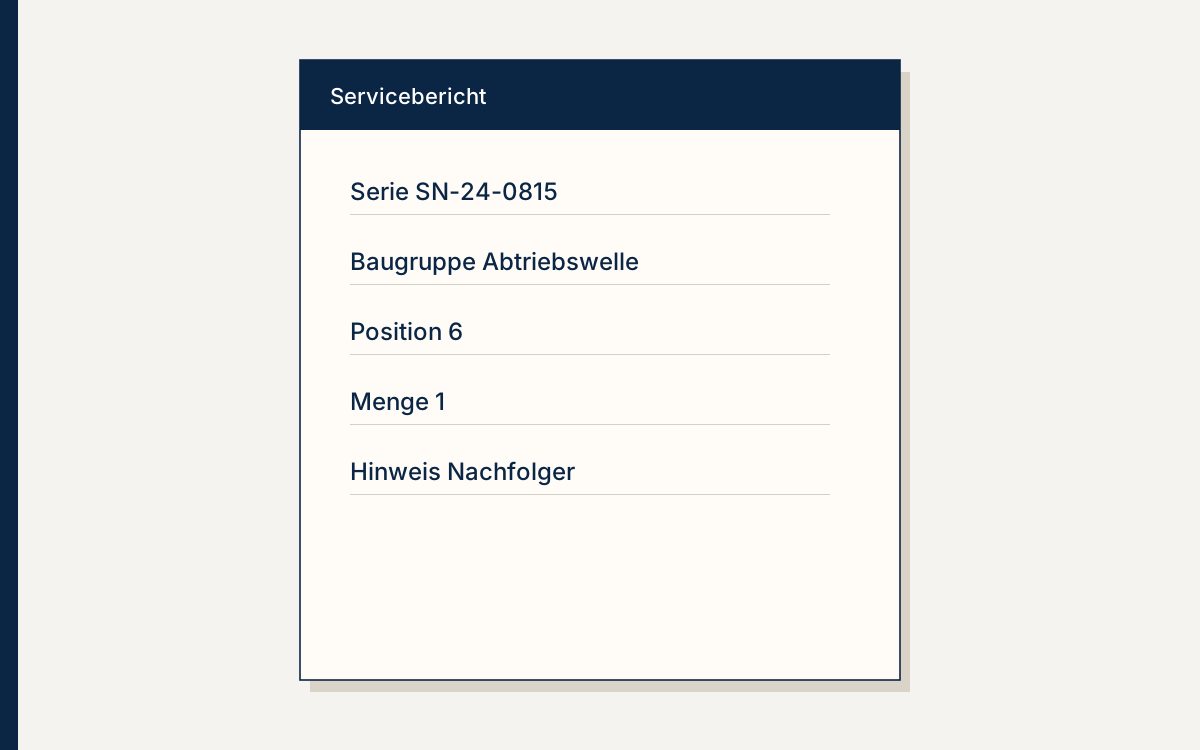
Inquiry
What service actually sends from the field
Service sends a photo of the nameplate and a finger on the PDF. The position replaces that finger.
By Clemens Jonathan Schmid4 min read
Inquiry
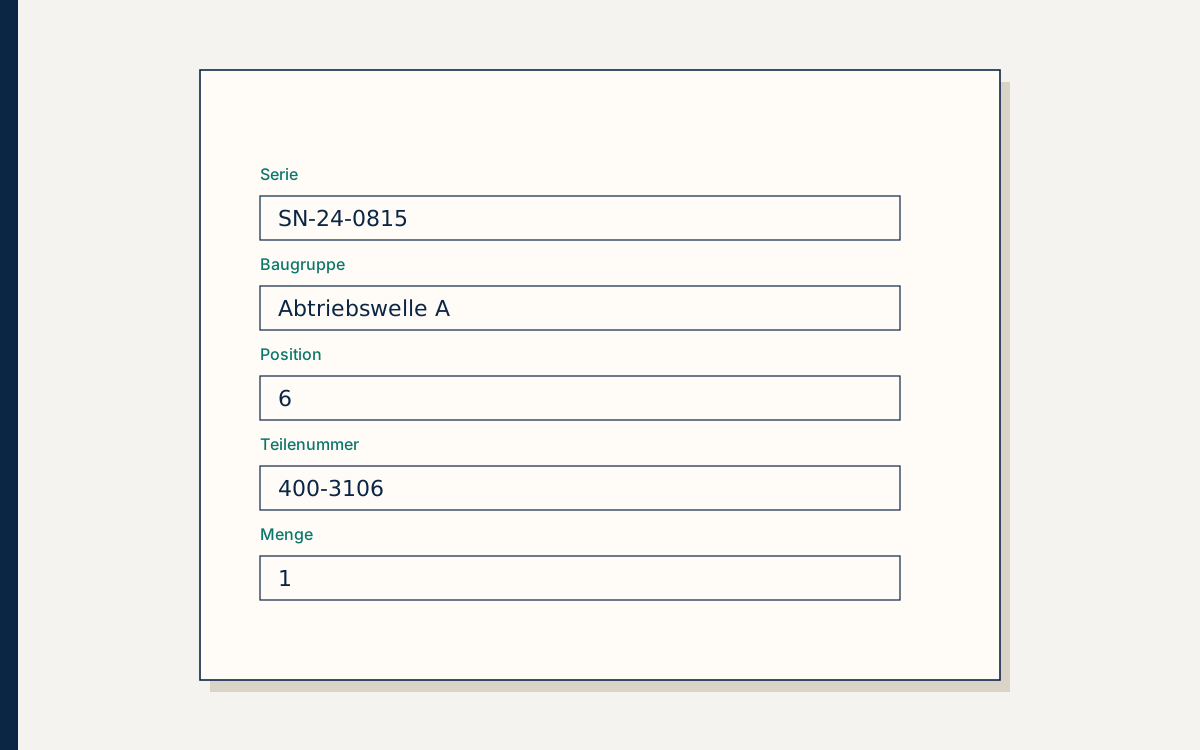
What a spare-parts request has to contain
Serial number, assembly, position, part number, quantity. Whatever is missing turns into a question back.
By Clemens Jonathan Schmid7 min read
Operation
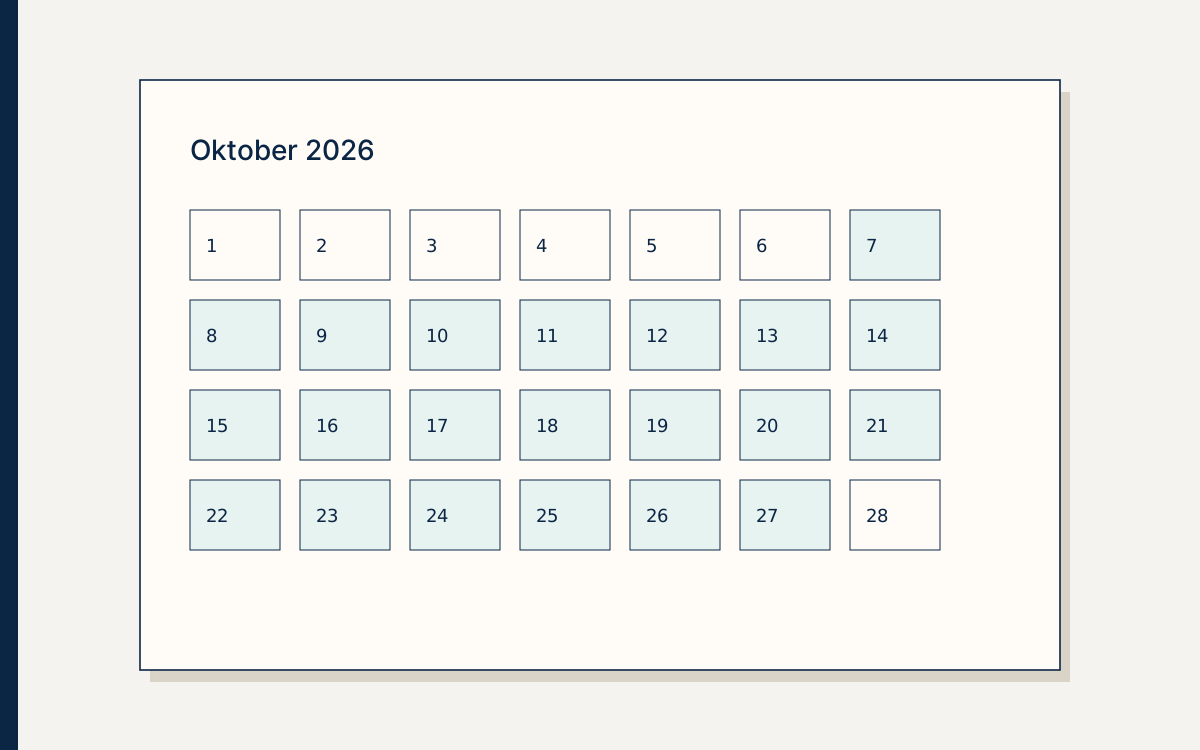
Four weeks to the first released assembly
Four weeks means marks, a bill-of-materials check, and the release of one assembly. Not the archive, and not the ERP.
By Clemens Jonathan Schmid4 min read