
Operation
One assembly is enough for the first trial
One sheet, one bill of materials, the serial numbers that belong to it. That shows whether the path holds before the whole family is documented.
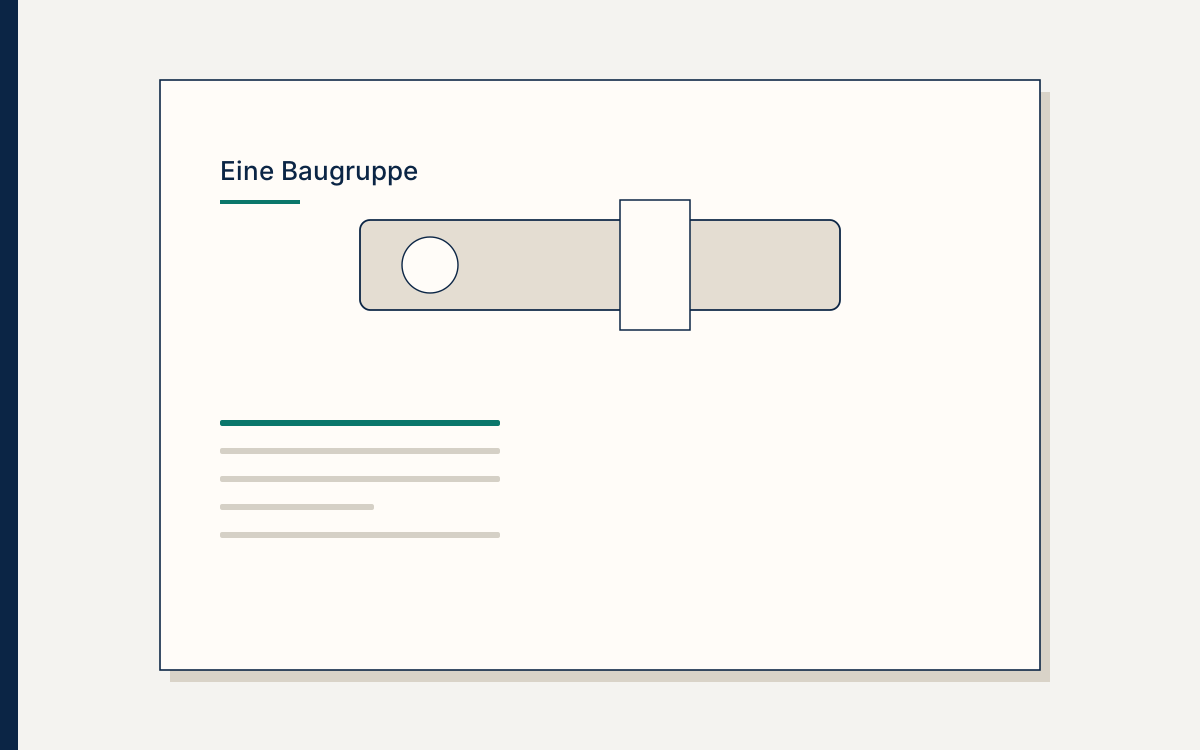
A complete catalogue is a fine goal and a poor start. Complete means every assembly, every revision, every series, every gap closed. That goal moves, because design keeps moving. Anyone who waits for it never starts. Anyone who starts with everything at once releases drafts because the date is pressing, and spends the next year collecting wrong positions.
One assembly is enough to see whether the drawing and the bill of materials can carry a request. Not just any assembly, but one that is actually asked for. The sealing station, the drive, the shoulder the film runs over. A sheet nobody orders only tests whether you can upload sheets. A sheet that comes up on the phone every week tests the path.
What the trial should show
It shows whether the positions on the sheet are in the list. It shows whether the series opens this sheet, and whether the neighbouring machine gets a different sheet when it needs one. It shows whether a person sees the gaps before a customer does. It shows whether the request arrives as a line that inside sales can take over without inventing the description again.
It does not show whether the whole product family will be finished in four weeks. Four weeks are a span for one assembly: placing the marks, matching, and release. They are not a span for an archive of twenty years. Anyone who promises both promises the archive and delivers the disappointment. Anyone who promises the one assembly and releases it has a path that can be repeated.
The scope after that sits in the proposal. Which assemblies, which series, what happens to the gaps the trial found. The proposal can stay small or become large. It cannot be honest if the trial was skipped, because then neither side knows what the documents really look like. "Our data is a mess" is a common sentence, and it is usually right. The trial turns that sentence into a list.
What you send for it
The exploded view, the bill of materials, and the serial numbers that should open this sheet. Nothing more, to start. No complete ERP history, no photos of every line, no promise that every screw gets a position. Screws that nobody orders on their own do not have to fill the sheet. The part people call about has to have a number.
The data may arrive untidy. A PDF with two revisions on one sheet, a list whose columns are named differently from the last project, serials in a table someone completed from memory. Untidy is the reason for the check. It becomes tidy through release, not through the hope that the next delivery of the data will already be the right one.
After that, and only after that
When the one assembly carries requests, the second is a repetition with new gaps, not a new concept. The temptation to change the concept after the first success is strong: now the interface after all, now the shop after all, now every type in parallel. Repetition is duller, and it is the catalogue. Every assembly that takes the same path enlarges the area where the customer no longer has to call.
Leave the assemblies that have not yet taken the path invisible. A half catalogue that says clearly what is missing is more usable than a full one that mixes the positions at the third station. The customer understands a missing assembly. The customer does not understand a wrong position, and orders it from you only once.
Which assembly you take
Take the one that already has a name in the inbox. Not the one that looks good at the fair, and not the one design has just redrawn and nobody has ordered yet. Ask inside sales which sheet they look for twice in a week. That is the assembly. If they name three, take one. The other two wait until the path sits for the first. Checking three sheets in parallel means explaining three kinds of gap at once, and at the end nobody knows which fault was in the path and which was in the documents.
The assembly needs a current exploded view, not the scan from 2009, unless that scan is what the machine in the field actually has. For old series, the old revision is the truth. For the series you are building now, it is the revision design issues today. Do not mix the two on one sheet in order to look complete. Two revisions are two sheets, and the series decides which one opens.
Add the bill of materials in the revision the sheet shows. Columns may have unusual names. They still have to give you position, part number, name, and quantity, even if the quantity in the list will not be the quantity ordered. And a list of the serials that should open this sheet. The list can be short. One machine for the first trial is allowed, if parts are really ordered for that machine. A machine that stands in the hall and never needs a part only tests the upload.
What happens in the four weeks
The marks go on the positions that should be orderable. The list is laid against them. What has no line is marked as a gap and is not filled with an invented number. What has a line and no place on the sheet stays invisible until someone sets the place, or decides that this part is not ordered on its own. Then release, by a person who can answer for both documents. Before release the customer sees nothing. After release the customer sees this assembly, and nothing else on the machine unless you have opened that too.
The customer you ask for the trial should know the machine and need a part, not be doing you a favour. They open by serial, tap the position, and send the request. At your end a line arrives, as email or as a file. Inside sales says whether they can make a quote from it without calling back and hearing the description again. If they can, the assembly holds. If they cannot, the finding is a list: wrong series, missing position, quantity taken from the bill of materials instead of from the customer, a successor the sheet swallowed. That list is the result. Being told that the portal is up is not.
What the trial does not decide
It does not decide a shop, an ERP interface, the instructions for use, or the rest of the product family. It decides whether this one path, for this one sheet, produces a line that is right. Everything else is a repetition or a different project. Both may follow. Neither has to be promised in the same breath.
If the scope is in the proposal, the assembly is what stands there, not "the catalogue". Further assemblies are further lines in the proposal, each with its drawing, its list, and its serials. That keeps visible what is released and what is still a description on the phone. The customer can live with that honesty. With a position that points at the wrong part, they can live with it once.
By Clemens Jonathan Schmid
Related articles
All articles
Operation
The assembly becomes visible when you release it
A drawing in the portal is a statement to the customer. The manufacturer makes that statement, not the upload.
By Clemens Jonathan Schmid4 min read
Operation
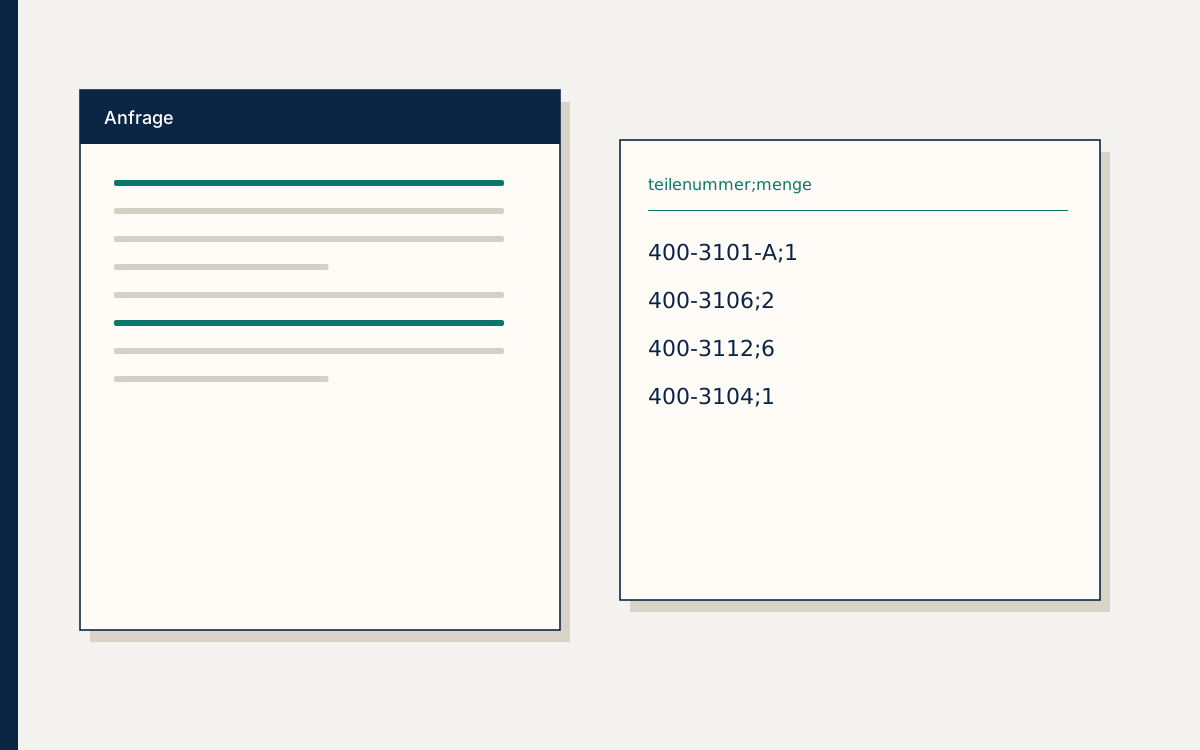
The inquiry arrives as an email or a CSV
A line a person can take over is the handover Partmira delivers, and the ERP stays yours.
By Clemens Jonathan Schmid8 min read
Documentation
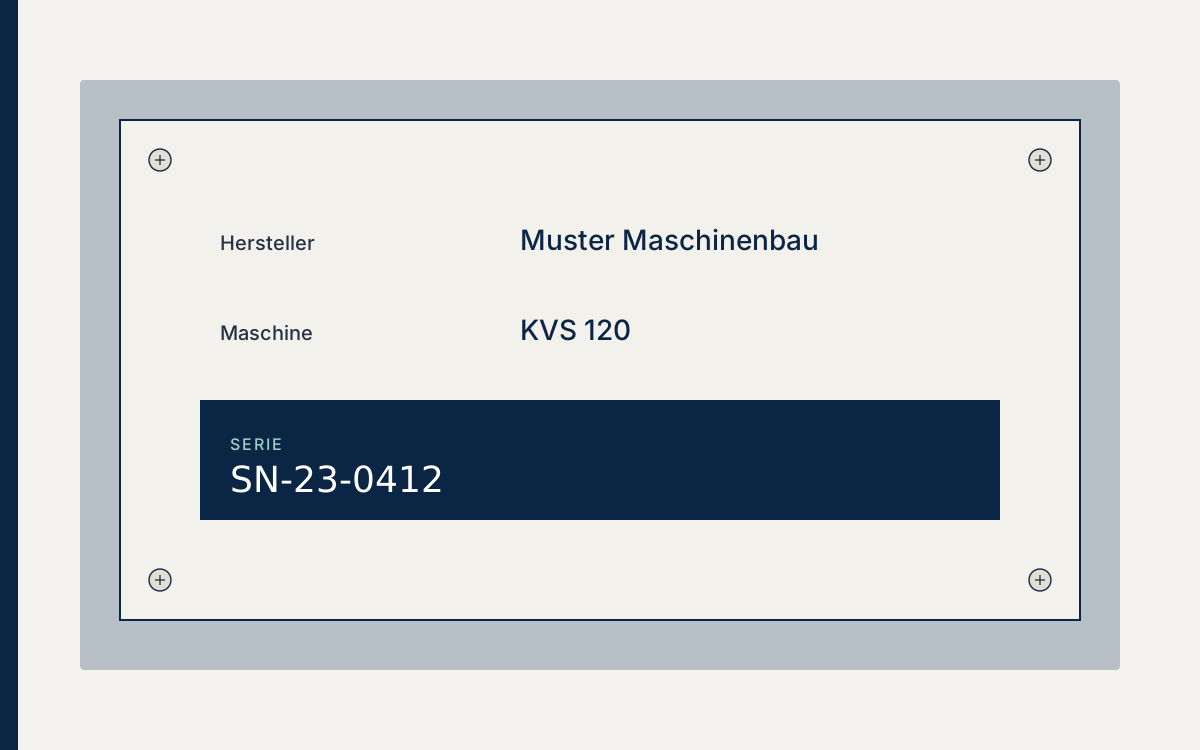
The nameplate is the start, not the part number
The plate carries the manufacturer, the type, and the serial. The part number of the wear part is almost never on it.
By Clemens Jonathan Schmid6 min read